Enter the 50/30/20 rule: a timeless, intuitive budgeting framework that cuts through the noise and provides a clear, sustainable path to financial health. Coined by Senator Elizabeth Warren in her book All Your Worth: The Ultimate Lifetime Money Plan, this rule isn’t about tracking every single penny with military precision. It’s about creating a balanced, big-picture structure for your money that aligns with your life and goals.
In this definitive guide for 2024, we will demystify the 50/30/20 rule. We’ll break down exactly what it is, how to implement it in today’s economic climate, and provide practical examples and tools to get you started. By the end of this article, you will have a actionable plan to get your finances on track, reduce money-related stress, and build a more secure future.
Why Simplicity Wins: The Philosophy Behind 50/30/20
Many people fail at budgeting not because they lack willpower, but because their system is too rigid or complicated. Detailed, category-based budgets can be time-consuming to maintain and often lead to frustration when life inevitably throws a curveball.
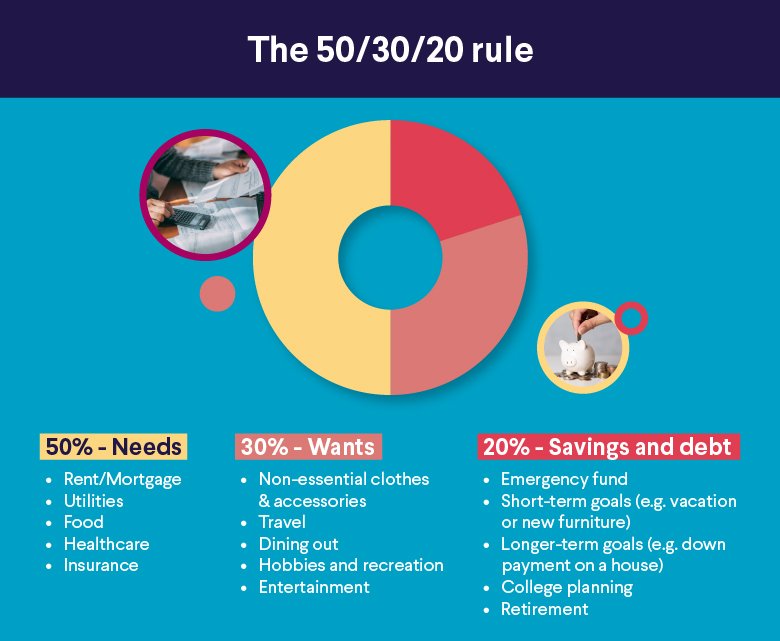
The 50/30/20 rule succeeds because it operates on a principle of proportionality. Instead of assigning fixed dollar amounts to “entertainment” or “groceries,” it focuses on three broad, powerful categories:
- 50% to Needs: For your essential, must-pay expenses.
- 30% to Wants: For the things that make life enjoyable.
- 20% to Savings and Debt Repayment: For your future financial security.
This approach is flexible. It adapts as your income grows or your circumstances change. It encourages mindful spending without demanding deprivation, making it a budget you can actually stick with for the long haul.
Part 1: Deconstructing the 50/30/20 Rule
Let’s dive deep into each of the three categories. Proper classification is the most critical step to making this rule work.
Category 1: Needs (50% of Your After-Tax Income)
Your Needs are the non-negotiable expenses required for your basic survival and fundamental obligations. This category should not exceed 50% of your take-home pay.
What Qualifies as a “Need”?
- Housing: Rent or mortgage payments (specifically the principal and interest portion). This also includes required homeowners or renters insurance.
- Utilities: Electricity, water, gas, sewage, and trash removal. Basic internet and cell phone service can be argued as a modern need, especially for work.
- Groceries: The cost of food necessary to feed yourself and your family. Note: This does not include dining out, takeout, or premium specialty foods.
- Transportation: Gas, public transit passes, car insurance, and basic car maintenance. If you have a car payment, that falls here.
- Minimum Debt Payments: The minimum required payment on all credit cards, student loans, personal loans, and other debts. Why just the minimum? Because paying the minimum is a legal obligation to avoid default. Any extra payments belong in the Savings category.
- Essential Insurance: Health insurance premiums, auto insurance (as mentioned), and any other legally required insurance.
- Basic Childcare: Costs necessary for you to work or attend school.
Gray Areas & Modern Considerations (2024 Context):
- Student Loans: With payments resuming, the minimum payment is a clear Need.
- Healthcare Costs: Beyond premiums, predictable, necessary medical expenses (e.g., a monthly prescription) can be considered a Need.
- Basic Internet/Phone: In a digital world, these are often essential for work, education, and managing life.
What’s NOT a Need? A larger apartment than you require, premium cable packages, organic groceries if you can’t afford them, a new car when a used one would suffice. The key is to be honest about what is truly essential.
Category 2: Wants (30% of Your After-Tax Income)
This is the category that makes budgeting sustainable. Wants are all the non-essential things that enhance your lifestyle. They are the “fun” money.
What Qualifies as a “Want”?
- Dining and Entertainment: Restaurants, bars, coffee shops, movie tickets, concerts, streaming services (Netflix, Hulu, etc.), and hobbies.
- Travel: Vacations, hotel stays, and airfare.
- Luxury Goods: New electronics, designer clothes, jewelry, and any “upgrades” you don’t strictly need.
- Personal Care: Spa treatments, salon visits, and premium grooming products beyond the basics.
- Gym Memberships: Unless prescribed by a doctor for a specific health condition, this is generally a Want.
- Any spending that is a choice, not a necessity.
The Psychological Power of the “Wants” Category: By explicitly allocating 30% of your income to Wants, you give yourself permission to spend without guilt. This prevents the feeling of deprivation that often derails restrictive budgets. The goal is not to eliminate this spending, but to contain it within a healthy limit.
Category 3: Savings & Debt Repayment (20% of Your After-Tax Income)
This is the category that builds your future financial security and freedom. It’s the engine for wealth creation and debt elimination.
What Belongs in This Category?
- Building an Emergency Fund: This is your top priority. Aim for 3-6 months’ worth of essential expenses (Needs) in a high-yield savings account.
- Retirement Savings: Contributions to a 401(k) (beyond any employer match), IRA (Traditional or Roth), or other retirement accounts.
- Additional Debt Repayment: Any payment above the minimum on credit cards, student loans, or other high-interest debt. This is crucial for getting out of debt faster and saving on interest.
- Other Savings Goals: Saving for a down payment on a house, a new car, your child’s education (529 Plan), or major investments.
- Investing: Contributions to a taxable brokerage account for long-term goals beyond retirement.
The “Debt Repayment” Nuance: Remember, the minimum payment is a Need. Any extra payment is a powerful tool for wealth-building (by eliminating future interest) and belongs in this 20% category.
Part 2: Implementing the 50/30/20 Rule: A Step-by-Step Guide
Now that you understand the categories, let’s put the rule into practice with a clear, actionable plan.
Step 1: Calculate Your Monthly After-Tax Income
This is your starting point. Your after-tax income, or take-home pay, is the amount that hits your bank account.
- For Employees: Look at your paystub. It’s your gross pay minus federal/state taxes, Social Security, Medicare, and any other deductions (like health insurance). If you have a consistent salary, this is straightforward. If your income varies, calculate a 3-6 month average.
- Include: Wages, salaries, tips, and any side hustle income (after accounting for taxes).
- What about 401(k) contributions? This is a key point. Since contributions to a traditional 401(k) are made pre-tax, they are not included in your after-tax income. However, that money is part of your 20% Savings! We will account for it later. For now, your take-home pay is your baseline.
Example: Let’s say your monthly take-home pay is $4,500.
Step 2: Categorize Your Monthly Spending
This is the most revealing part of the process. You need to see where your money is actually going.
- Gather Data: Pull the last 2-3 months of bank and credit card statements.
- Categorize Every Expense: Go through each transaction and label it as a Need, Want, or Savings/Debt payment. Use a spreadsheet, a budgeting app (like Mint or You Need A Budget), or just a piece of paper.
- Be Brutally Honest: This is for your eyes only. That daily latte is a Want. The premium gym membership is a Want. Classifying things correctly is essential for an accurate diagnosis.
Step 3: Do the Math and Compare
Now, calculate the total amount you are currently spending in each category and find the percentage of your income it represents.
- Total Needs: $2,300 / $4,500 = 51%
- Total Wants: $1,600 / $4,500 = 36%
- Total Savings/Debt: $600 / $4,500 = 13%
Compare this to the 50/30/20 ideal:
- Needs: 51% vs. 50% (Slightly over)
- Wants: 36% vs. 30% (Significantly over)
- Savings: 13% vs. 20% (Significantly under)
This snapshot tells a clear story: Wants are crowding out Savings.
Step 4: Adjust and Optimize Your Spending
This is where you create your new, balanced budget. Your goal is to shift percentages to align with 50/30/20.
If Your Needs Are Over 50%:
This is a common challenge in high-cost-of-living areas.
- Can you reduce housing costs? Consider getting a roommate, negotiating rent at renewal, or refinancing your mortgage.
- Cut utility bills: Be more energy-conscious, shop for cheaper internet/phone plans.
- Reduce grocery bills: Plan meals, use coupons, buy generic brands.
- Lower transportation costs: Use public transit more, carpool, or see if you can switch to a cheaper car insurance provider.
If Your Wants Are Over 30%:
- Conduct a “subscription audit.” Cancel unused streaming services, magazine subscriptions, or app memberships.
- Dine out less frequently. Challenge yourself to cook at home more often.
- Implement a “cooling-off” period for non-essential purchases. Wait 24-48 hours before buying a Want to see if you still really want it.
- Look for free or low-cost entertainment like parks, libraries, and community events.
If Your Savings Are Under 20%:
This will often automatically correct itself as you rein in your Wants and Needs.
- Pay Yourself First: The most effective savings strategy. As soon as you get paid, automatically transfer your target 20% (or a portion of it) to your savings and investment accounts before you have a chance to spend it. Set up automatic transfers.
- Attack High-Interest Debt: Channel the money freed up from Wants into paying down credit card debt. The interest you save is a guaranteed return on your money.
Step 5: Automate and Monitor
- Automate: Set up automatic transfers to your savings account and automatic investments to your brokerage or retirement account.
- Monitor: You don’t need to track daily. A monthly check-in, using the same categorization process from Step 2, is sufficient to see if you’re staying on track. The 50/30/20 rule is forgiving; if you’re a few percentage points off in a given month, just adjust the next.
Part 3: Real-Life Scenarios and Adjustments for 2024
Let’s see how the 50/30/20 rule applies to different situations.
Scenario A: The Recent Graduate (Take-home pay: $3,500/month)
- Needs ($1,750): Rent ($1,000), Utilities/Phone ($200), Groceries ($250), Student Loan Min. Payment ($200), Car Insurance ($100).
- Wants ($1,050): Dining/Entertainment ($400), Travel Fund ($300), Shopping ($350).
- Savings/Debt ($700): Emergency Fund ($300), Roth IRA ($400).
Analysis: This budget is perfectly balanced. The graduate is building an emergency fund and saving for retirement early, all while enjoying their post-college life.
Scenario B: The Hustler with Side Income (Take-home pay: $6,000/month)
This includes a $4,500 salary and $1,500 from a side business.
- Needs ($2,700): Mortgage ($1,800), Utilities/Groceries ($600), Car Payment/Insurance ($300).
- Wants ($1,800): This is a high “Wants” budget, allowing for hobbies, nice vacations, and dining.
- Savings/Debt ($1,500): This is a powerful 25% savings rate! They max out their IRA, add to their brokerage account, and save for a new car.
Analysis: The side hustle income directly supercharges their savings, accelerating their path to financial goals.
Scenario C: The High-Cost-of-Living Family (Take-home pay: $8,000/month)
- Needs ($5,200 – 65%): This is the reality for many families. High mortgage, childcare costs, and groceries push Needs way over 50%.
- Wants ($1,800 – 22.5%): They’ve had to consciously reduce discretionary spending.
- Savings/Debt ($1,000 – 12.5%): Savings are below target.
What to Do? This family can’t immediately fix this. The solution is a two-pronged approach:
- Gradual Optimization: Slowly find ways to trim Needs where possible (e.g., cheaper grocery stores, re-shop insurance).
- Income Growth: Focus on increasing household income through raises, promotions, or side projects. The 50/30/20 rule is a percentage; as the income pie grows, the 20% slice for savings becomes more substantial, even if the Needs percentage remains slightly high for a while.
Read more: The Silver Tsunami: Investment Opportunities in the U.S. Healthcare and Senior Living Sector
Part 4: Advanced Tips and Tools for 2024
- Leverage High-Yield Savings Accounts (HYSAs): Don’t let your emergency fund languish in a traditional savings account with near-zero interest. Online banks offer HYSAs with significantly higher APYs, helping your money fight inflation.
- Understand Tax-Advantaged Accounts: Maximize contributions to your 401(k), especially if there’s an employer match (it’s free money!), and IRAs. For 2024, the contribution limits are:
- 401(k): $23,000 ($30,500 for those 50+)
- IRA: $7,000 ($8,000 for those 50+)
- Use Technology: Budgeting apps can automatically categorize your spending, making the 50/30/20 tracking process much easier.
- Be Flexible, Not Rigid: The 50/30/20 rule is a guideline. If you have a major, one-time expense (e.g., a wedding), it’s okay to dip into your Wants or temporarily reduce Savings to accommodate it. The key is to return to the framework afterward.
Conclusion: Your Journey to Financial Clarity Starts Now
The 50/30/20 rule is more than a budget; it’s a philosophy of financial balance. It acknowledges that life requires us to meet our obligations, enjoy the present, and prepare for the future—all at the same time. By providing a simple, flexible framework, it empowers you to make conscious choices with your money, reducing stress and building confidence.
You don’t need a finance degree or a six-figure salary to start. You just need a willingness to look at your finances honestly and a commitment to a simpler, smarter system.
Your first step is the most important one: Calculate your after-tax income. Then, take an hour this weekend to categorize your last month of spending. The insight you gain will be the catalyst for getting your finances on track in 2024 and beyond.
Read more: Interest Rate Crossroads: A Pulse Check on the U.S. Financials and Banking Sector
Frequently Asked Questions (FAQ)
Q1: Is the 50/30/20 rule realistic for someone with a low income or living in a very expensive city?
This is the most common challenge. In high-cost areas, Needs can easily consume 60-70% of income. If this is you, don’t despair. Use the 50/30/20 rule as a target and an aspiration. Your immediate goal is to get as close as possible. Focus on the principles: minimize your Needs where you can, be disciplined with your Wants, and save whatever you can, even if it’s 5% or 10%. The rule’s power is in creating awareness, which is the first step toward making changes—including potentially seeking higher income.
Q2: Should I calculate the percentages based on my gross or net income?
Always use your after-tax, net income (your take-home pay). This is the money you actually have control over. Using gross income will create an unrealistic budget because a significant portion is already allocated to taxes.
Q3: Where does retirement savings that comes out of my paycheck (like a 401(k)) fit in?
This is a crucial point. If your 401(k) contribution is taken from your gross pay, it is not included in your after-tax income calculation. However, that money is part of your 20% Savings. So, when you calculate your 20% savings bucket, you must add back your 401(k) contribution (and any employer match) to see if you’re hitting your target.
- Example: Your take-home pay is $4,000. You also contribute $400 pre-tax to your 401(k). Your total “Savings” for the 50/30/20 calculation is the $400 401(k) contribution + any other savings from your take-home pay.
Q4: I have a lot of high-interest credit card debt. Should I still only put the minimum payment in “Needs” and the rest in “Savings”?
Yes, but with a strategic twist. Your absolute priority should be attacking that high-interest debt. While the minimum payment is a Need, you should aggressively funnel the vast majority of your 20% “Savings” category into extra debt payments. Consider temporarily pausing other savings (like for a vacation) until the debt is under control. The interest you save is a better guaranteed return than most investments.
Q5: How do I handle irregular expenses, like car repairs or annual insurance premiums?
The best practice is to “smooth them out” monthly. Estimate your total annual irregular expenses (e.g., $600 for car maintenance, $1,200 for insurance). Divide by 12 ($150 per month) and treat that monthly amount as a Need (for true essentials like insurance) or a Savings goal (for predictable but variable costs like maintenance). Transfer that money each month into a dedicated “Sinking Fund” savings account, so the money is there when the bill arrives.
Q6: Can I use the 50/30/20 rule if my income is variable (e.g., I’m a freelancer)?
Absolutely, but it requires more discipline. Calculate your average monthly after-tax income based on the last 12-24 months. Base your budget on this conservative estimate. In high-income months, you will naturally exceed your 20% savings target. In low-income months, you’ll dip into your buffer. The key for variable income earners is to build a larger emergency fund (6+ months of expenses) to act as a shock absorber.
Q7: What’s the difference between this and other budgeting methods, like zero-based budgeting?
The 50/30/20 rule is a “top-down” or “percentage-based” budget. It gives you guardrails but freedom within them. Zero-based budgeting (ZBB), like the You Need A Budget (YNAB) method, is a “bottom-up” approach where you assign every single dollar a job, and your income minus your expenses equals zero. ZBB is more detailed and hands-on, which is great for some, but can feel restrictive for others. The 50/30/20 rule is often a better starting point for those new to budgeting.