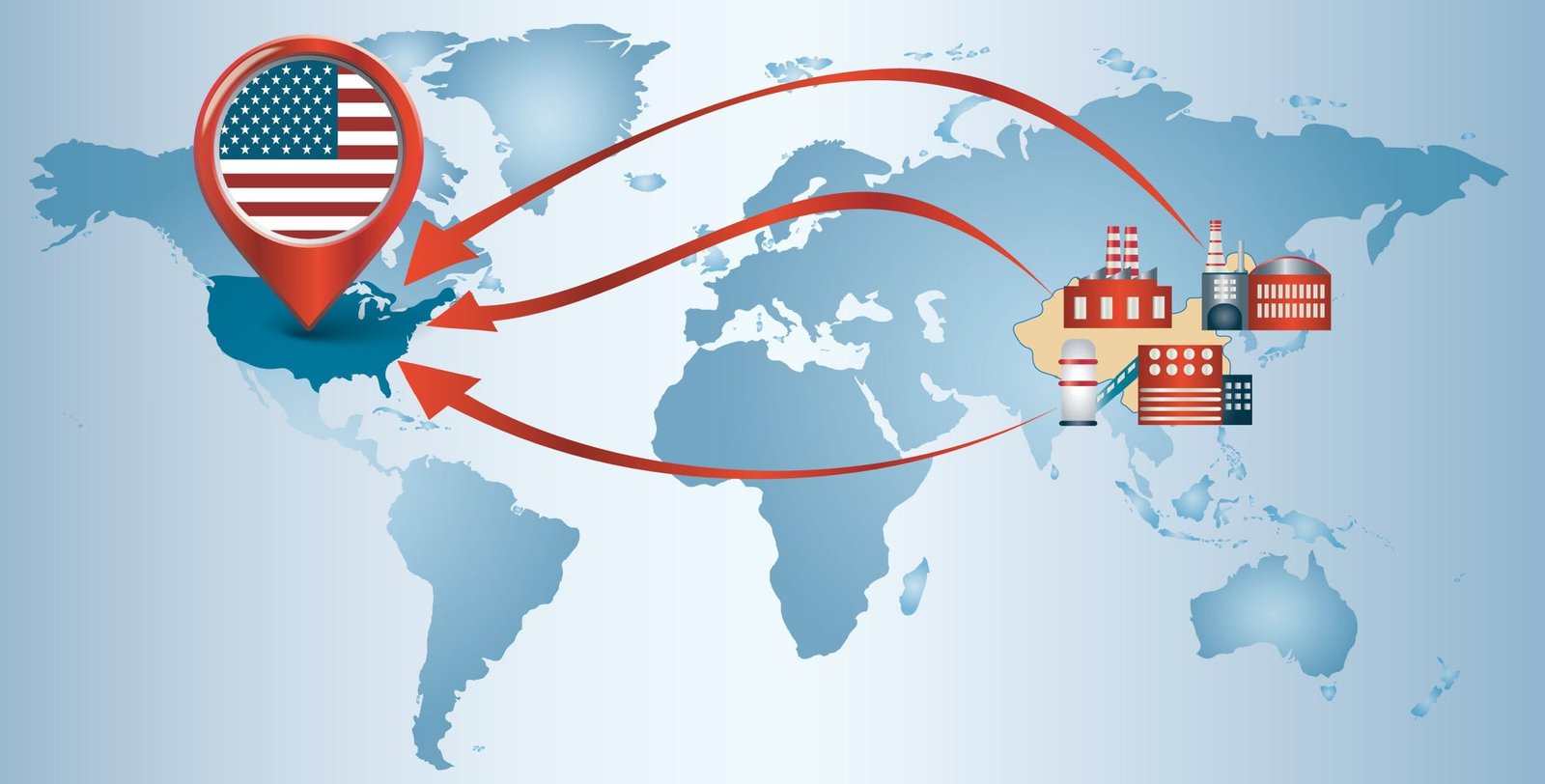
For decades, the dominant mantra of global economics was efficiency above all. The pursuit of the lowest cost and the most streamlined production created intricate, globe-spanning supply chains that were marvels of logistical engineering. A smartphone’s components might travel across a dozen borders before final assembly, and a single automobile could represent a United Nations of parts and labor. This hyper-globalization, centered heavily on manufacturing hubs like China, delivered low prices and abundant goods to American consumers and corporations.
However, this efficiency came at a cost: fragility. The COVID-19 pandemic was a seismic shock, laying bare the vulnerabilities of these elongated supply chains. Americans witnessed empty store shelves, months-long waits for automobiles, and critical shortages of medical supplies and semiconductors. Subsequent geopolitical tensions, trade wars, and the war in Ukraine further underscored the national security and economic risks of over-reliance on geopolitical rivals or politically unstable regions.
In response, a new paradigm is rapidly taking hold, reshaping the very architecture of international trade. This strategy is called “friend-shoring” (also known as “ally-shoring” or “near-shoring”). It represents a fundamental shift from a model prioritizing cost-effectiveness to one prioritizing resilience, security, and shared democratic values. Friend-shoring is the deliberate restructuring of supply chains to source materials, components, and finished goods from and through politically aligned, trustworthy nations. This is not an isolationist retreat from the world, but a strategic recalibration of how the US engages with it.
This article will delve into the real-world implementation of friend-shoring, examining the driving forces behind it, the key allied nations and industries at the forefront, the tangible benefits, the significant challenges, and the long-term implications for the US economy and its global leadership.
Part 1: The Genesis of a New Economic Doctrine – Why Friend-Shoring is Happening Now
The move toward friend-shoring is not an accident; it is a calculated response to a confluence of powerful and disruptive events.
1. The Pandemic Exposed Critical Vulnerabilities:
The just-in-time (JIT) manufacturing model, which minimizes inventory costs, collapsed when factories shut down and logistics networks seized. The US faced an alarming dependency on overseas production for essential goods:
- Personal Protective Equipment (PPE): At the pandemic’s onset, the US discovered it relied on China for over 70% of its face masks and other PPE.
- Semiconductors: Factory closures in Asia caused a global chip shortage, halting production lines for everything from cars to home appliances, costing the US economy hundreds of billions of dollars.
- Pharmaceuticals: A heavy reliance on China and India for active pharmaceutical ingredients (APIs) raised alarms about the security of the nation’s drug supply.
2. Geopolitical Rivalry and National Security Concerns:
The US-China relationship has evolved from one of strategic partnership to one of “strategic competition.” China’s use of economic leverage for political goals, intellectual property theft, and human rights issues have made over-dependence a clear national security threat. Incidents like the leveraging of rare earth mineral exports during diplomatic disputes demonstrated how supply chains could be weaponized. This forced a bipartisan recognition in Washington that economic security is inextricably linked to national security.
3. Legislative Catalysts: The CHIPS and Science Act and the Inflation Reduction Act
The US government has moved beyond rhetoric to active incentivization. Two landmark pieces of legislation are turbocharging the friend-shoring agenda:
- The CHIPS and Science Act (2022): This act provides over $52 billion in subsidies and tax credits for semiconductor research, development, and manufacturing within the United States. Crucially, it includes “guardrails” that restrict recipients from expanding advanced chip manufacturing in “countries of concern” like China and Russia for a decade, actively redirecting investment to allied nations.
- The Inflation Reduction Act (IRA) (2022): While focused on climate and energy, the IRA is a powerful friend-shoring tool for the clean energy sector. It offers massive tax credits for electric vehicles, batteries, and renewable energy projects, but with stringent requirements for where critical minerals are sourced and where components are manufactured. To qualify for the full EV tax credit, a percentage of the battery’s critical minerals must be extracted or processed in the US or a country with which the US has a free trade agreement, and a percentage of battery components must be manufactured or assembled in North America.
4. The Resilience Over Efficiency Calculus
Corporations are now performing a new risk-benefit analysis. The old model valued low cost and high efficiency. The new model assigns a higher value to resilience, predictability, and risk mitigation. While producing goods in a friendly nation may be marginally more expensive, the cost of a complete supply chain disruption—lost sales, idle factories, reputational damage—is now seen as far greater. This shift in corporate strategy is aligning with the national security objectives of the US government.
Part 2: Friend-Shoring in Action – Key Sectors and Strategic Partnerships
The theory of friend-shoring is being translated into concrete action across several critical industries. The following case studies illustrate how this strategy is being implemented through deepened partnerships with allied nations.
Case Study 1: Semiconductors & Electronics – Building a Democratic Tech Ecosystem
The semiconductor supply chain is the quintessential example of friend-shoring necessity. The most advanced chips are primarily manufactured in Taiwan and South Korea, with packaging and testing often done in Southeast Asia, and the US reliant on both for its tech and defense sectors.
- The US-Japan-South Korea-Taiwan (“Chip 4”) Alliance: The US is actively fostering a collaborative ecosystem among these technological powerhouses. While geopolitically sensitive regarding Taiwan, the intent is to create a self-sufficient, secure supply chain for advanced chips, reducing reliance on China. Joint research initiatives, cross-investment, and coordinated export controls on advanced technology to adversaries are key components.
- TSMC in Arizona: In a landmark move, Taiwan Semiconductor Manufacturing Company (TSMC) is building two advanced semiconductor fabrication plants (fabs) in Arizona, with an investment exceeding $40 billion. This is not a simple offshoring of jobs; it’s a strategic onshoring/friend-shoring of the world’s most critical technology. The project is supported by CHIPS Act funding and involves collaboration with US equipment suppliers like Applied Materials and Lam Research.
- Intel’s European Expansion: US chip giant Intel is investing over $33 billion to build new fabs in Germany, Poland, and Ireland, creating a “Silicon Junction” across allied NATO countries. This diversifies production away from Asia and strengthens the transatlantic tech corridor.
Case Study 2: Critical Minerals & Electric Vehicle Batteries – Powering the Green Transition
The transition to a clean energy economy is entirely dependent on a suite of critical minerals—lithium, cobalt, nickel, graphite, and rare earth elements. China currently dominates the processing and refining of these minerals, controlling over 80% of some global supply chains.
- The US-Australia Partnership: Australia is a key ally with vast reserves of critical minerals like lithium, cobalt, and rare earths. The US is actively investing in Australian mining and processing projects to create a China-free supply chain. Companies like MP Materials (US) and Lynas Rare Earths (Australia) are working together to build full-scale rare earth separation facilities in Texas and elsewhere.
- The Minerals Security Partnership (MSP): Led by the US, this partnership of 13 allied nations (including Canada, Australia, UK, Japan, and EU members) aims to catalyze public and private investment in responsible critical minerals supply chains globally. It is the diplomatic arm of friend-shoring for the energy sector.
- Canada’s Integral Role: As a NATO ally and USMCA partner, Canada is a natural friend-shoring destination. It possesses significant reserves of critical minerals like nickel, cobalt, and lithium. The IRA’s North American assembly requirements have spurred a wave of investment in Canadian battery component and EV manufacturing, creating an integrated North American EV hub.
Case Study 3: The North American Reintegration – USMCA as a Friend-Shoring Framework
The US-Mexico-Canada Agreement (USMCA), which replaced NAFTA, was a precursor to the friend-shoring trend. It strengthened North American trade rules and is now serving as the foundational legal architecture for regional supply chain integration.
- Mexico’s Manufacturing Boom: Mexico is experiencing a massive influx of investment, dubbed “near-shoring.” Its proximity to the US market, competitive labor costs, and USMCA benefits make it an ideal location for everything from automotive and aerospace to appliances and medical devices. Mexican exports to the US have surged as companies relocate production from Asia.
- Automotive Sector Transformation: The USMCA’s strict rules of origin (requiring a higher percentage of a vehicle’s components to be made in North America to qualify for zero tariffs) are actively reshaping the auto industry. Billions are being invested in new plants and retooled facilities across the US, Canada, and Mexico to create a more self-reliant regional automotive cluster.
Part 3: The Benefits and Opportunities of a Reconfigured Supply Chain
The strategic shift to friend-shoring offers a multitude of advantages that extend beyond mere risk mitigation.
- Enhanced Economic and National Security: This is the primary driver. By securing supply chains for critical goods like chips, medicines, and battery materials within a network of allies, the US insulates itself from economic coercion and ensures the functioning of its military and essential infrastructure during a crisis.
- Increased Supply Chain Resilience and Predictability: Shorter, geographically concentrated supply chains are less prone to massive disruptions from a single event. Proximity allows for better oversight, faster shipping times, and more agile responses to market changes.
- Strengthening Democratic Alliances and Shared Values: Friend-shoring is as much a geopolitical strategy as an economic one. By deepening trade ties with other democracies, the US reinforces a values-based international order. It creates mutual economic dependencies that strengthen diplomatic and security alliances, presenting a united front against authoritarian regimes.
- Potential for Higher Labor and Environmental Standards: Production in countries with strong labor laws and environmental regulations helps combat the race-to-the-bottom dynamic of the old model. The USMCA, for instance, includes chapters enforcing labor rights and environmental protection, which were weak or absent in NAFTA.
- A Renaissance in US Manufacturing and Innovation: The CHIPS Act and IRA are sparking a historic boom in US manufacturing construction. This is not just about assembly lines; it’s about rebuilding the entire industrial ecosystem, from R&D to production, fostering innovation and creating high-skilled, high-wage jobs.
Part 4: The Inherent Challenges and Criticisms
Despite its compelling logic, the friend-shoring transition is fraught with difficulties and is not without its detractors.
- The Inevitability of Higher Costs: Labor, compliance, and operational costs in allied nations like the US, Canada, Australia, and the EU are almost always higher than in previous manufacturing hubs. These costs will likely be passed on to consumers in the form of higher prices for goods, from electronics to cars, potentially fueling inflation in the short to medium term.
- Capacity and Scalability Issues: Allied nations simply do not currently have the capacity to immediately absorb the vast production being relocated from Asia. Building new mines, fabs, and factories takes years, if not decades. There is a significant lag between policy intent and operational reality, creating a vulnerable transition period.
- The Complexity of “Decoupling” from China: A complete decoupling from the Chinese economy is neither feasible nor desirable. China remains a massive market and a key supplier for many non-critical goods. The challenge is one of “de-risking”—carefully reducing dependency in strategic sectors while managing the ongoing relationship in others. This is a delicate and complex balancing act.
- Straining Relations with the Global South: Friend-shoring, by its nature, can be exclusionary. Developing nations in Southeast Asia, Africa, and Latin America that are not part of the core “friendly” bloc may feel sidelined, pushing them closer to China and Russia. This could lead to a fragmentation of the global economy into competing blocs.
- Corporate Pushback and the Profit Motive: Ultimately, corporations are driven by shareholder returns. Without continued government pressure and incentives, the powerful lure of lower costs could see a gradual drift back to risky but cheaper partners once the memory of recent disruptions fades.
Read more: Beyond China: US Investors’ Guide to Navigating India’s Stock Market Boom
Part 5: The Road Ahead – Sustaining the Momentum
Friend-shoring is a long-term strategic project, not a short-term fix. Its success will depend on sustained, multi-faceted effort.
- Continued Bipartisan Political Support: The political consensus on confronting China and strengthening supply chain resilience must endure beyond election cycles. Funding for incentives and a coherent, long-term trade policy are essential.
- Investment in Infrastructure and Workforce: Reshoring production requires a modern infrastructure—ports, roads, railways, and a reliable energy grid. Crucially, it requires a skilled workforce. Significant investment in STEM education and vocational training is needed to fill the high-quality jobs being created.
- Deepening Diplomatic and Trade Ties: The US must continue to forge new trade agreements and strengthen existing partnerships, such as the Indo-Pacific Economic Framework (IPEF), to expand the circle of “friends” and create more robust and diverse supply chain networks.
- Leveraging Technology for Transparency: Blockchain, AI, and IoT sensors can be deployed to create transparent and traceable supply chains. This allows companies and governments to verify the origin of materials and ensure they meet labor and environmental standards, a key requirement of friend-shoring.
Conclusion: A More Resilient, if More Complex, Future
The era of hyper-globalization, defined by a single-minded pursuit of efficiency, is over. The rise of friend-shoring marks a new chapter—one defined by the prudent pursuit of resilience and security. It is a recognition that the lowest price does not always represent the best value when national stability is at stake.
The rewriting of US supply chains with allied nations is already underway, driven by a powerful alignment of government policy, corporate strategy, and geopolitical necessity. From the semiconductor fabs of Arizona to the lithium mines of Australia and the auto factories of Mexico, a new map of global trade is being drawn.
This transition will not be smooth or cheap. It will require significant investment, political fortitude, and patience. Consumers will likely pay more for their goods. Yet, the alternative—continued vulnerability to pandemics, political coercion, and conflict—is far less acceptable. By consciously building an economic network rooted in shared interests and democratic values, the United States is not retreating from the world; it is striving to build a more secure, stable, and sustainable foundation for its prosperity and leadership in the 21st century.
Read more: The AI Arms Race: How US Tech Giants are Consolidating Power on the Global Stage
Frequently Asked Questions (FAQ) Section
Q1: What is the simple definition of friend-shoring?
A: Friend-shoring is a business and economic strategy where a country relocates its supply chains and production to politically aligned and trustworthy nations (its “friends” or allies). The goal is to reduce dependency on geopolitical rivals or unstable regions, thereby increasing economic and national security.
Q2: How is friend-shoring different from onshoring and reshoring?
A:
- Onshoring/Reshoring: Bringing production and supply chains back within a country’s own borders (e.g., a US company moving a factory from China back to Ohio).
- Friend-Shoring: Moving production to a trusted allied nation, which could be a nearby neighbor or a country across the globe (e.g., a US company moving a factory from China to Mexico or Poland).
Q3: Doesn’t friend-shoring just create a new form of dependency?
A: It creates interdependence, which is different from the vulnerable dependency of the past. The key is diversification. Instead of being reliant on a single, non-aligned nation like China for a critical product, friend-shoring spreads risk across a network of allied countries with shared strategic interests. This mutual reliance among allies actually strengthens diplomatic and security ties, making the network more resilient.
Q4: Will friend-shoring make everything more expensive for me?
A: In the short to medium term, it is very likely that some goods, particularly electronics, electric vehicles, and other high-tech products, will see price increases. Manufacturing in countries with higher labor and regulatory costs adds expense. However, proponents argue that this cost should be weighed against the “cost” of supply chain disruptions, which lead to product shortages, massive delays, and economic damage. Over the long term, as new facilities scale up and innovation continues, some of these cost pressures may ease.
Q5: Is the US trying to completely decouple its economy from China?
A: Most policymakers and experts use the term “de-risking” rather than “decoupling.” The goal is not a complete separation, which is seen as impractical and damaging to both economies. Instead, the strategy is to reduce dependence on China in specific, critical sectors vital to national security (like semiconductors, critical minerals, and pharmaceuticals) while continuing trade in non-essential consumer goods. It’s a targeted reduction of vulnerability, not a total divorce.
Q6: Which countries are the biggest “winners” in the US friend-shoring strategy?
A: Key beneficiaries include:
- North American Partners: Mexico and Canada due to proximity and the USMCA trade agreement.
- Strategic Asian Allies: Japan, South Korea, Taiwan, India, and Australia for technology, critical minerals, and as counterweights to China.
- Key European Partners: Members of the European Union, especially for advanced manufacturing and as part of the democratic alliance.
Q7: What role do corporations play in friend-shoring? Are they forced to do it?
A: While government policy sets the direction through legislation (like the CHIPS and IRA acts) and export controls, corporations are the primary actors. They are incentivized, not entirely forced. The government creates a favorable environment through subsidies and tax credits while simultaneously raising the risks (through tariffs, sanctions, etc.) of operating in “unfriendly” jurisdictions. Corporations then make their own strategic decisions based on this new risk-reward calculus.
Q8: How does friend-shoring impact the environment?
A: The impact is complex. On one hand, producing goods closer to their point of consumption can reduce the carbon emissions associated with long-distance shipping. Furthermore, friend-shoring often involves partners with stricter environmental regulations than previous manufacturing hubs. On the other hand, building new mines and factories has its own environmental footprint. The success of friend-shoring in being “green” will depend on strong environmental safeguards being baked into the new projects and trade agreements from the start.