In the intricate, 24-hour-a-day symphony of global finance, few events command a collective hush like a meeting of the Federal Open Market Committee (FOMC) of the U.S. Federal Reserve. The announcement of its interest rate decision is more than just domestic monetary policy; it is a seismic event that sends shockwaves across oceans and continents, redirecting the relentless flow of global capital. For international investors, corporate treasurers, and central bankers from Tokyo to Frankfurt, the question “What is the Fed’s next move?” is not merely academic—it is the foundational variable in their strategic calculus.
This article delves deep into the powerful and complex relationship between U.S. interest rates and the movement of investment capital into the United States. We will explore the fundamental mechanisms at play, analyze the current economic landscape shaping the Fed’s decisions, and project how the ensuing global capital flows are reshaping the U.S. economy, financial markets, and its position in the world order. Understanding this dynamic is crucial for anyone with a stake in the global marketplace, as the gravitational pull of U.S. monetary policy continues to define the opportunities and risks of our time.
Part 1: The Foundational Mechanics – Why the Fed Moves the World
To comprehend the global impact, one must first understand the core principles that make the Fed’s policy rate—the federal funds rate—so influential.
1.1 The Risk-Free Rate Benchmark
U.S. Treasury securities, backed by the full faith and credit of the U.S. government, are universally considered the closest financial instrument to a “risk-free” asset. The yield on these Treasuries, particularly the 10-year note, serves as the foundational benchmark for pricing virtually every other asset class on earth. When the Fed raises the federal funds rate, it directly pushes up the short-end of the Treasury yield curve. This, in turn, influences longer-term rates, resetting the global benchmark for the cost of capital.
The Implication: A higher “risk-free” rate means that an investment in U.S. government debt becomes more attractive on a pure yield basis. To entice investors away from this safe haven, all other investments—from corporate bonds in Europe to equities in emerging markets—must offer a correspondingly higher potential return (a “risk premium”). This simple recalibration is the primary engine for shifting global capital.
1.2 The Currency Carry Trade and the Almighty Dollar
Interest rates are a primary driver of currency exchange rates. When the Fed hikes rates while other central banks hold steady or lag behind, the interest rate differential between the U.S. and other nations widens. This makes holding U.S. dollars more attractive, as deposits and dollar-denominated assets offer superior yields.
This dynamic fuels the “carry trade” in reverse. Traditionally, investors borrow in a low-yielding currency (like the Japanese Yen) to invest in a higher-yielding one. When the dollar offers high yield and is perceived as a safe haven, it attracts massive inflows. Investors worldwide sell their local currencies to buy dollars, strengthening the USD. A strong dollar has profound consequences:
- It makes U.S. imports cheaper, helping to curb inflation.
- It makes U.S. exports more expensive for foreign buyers, potentially hurting multinational corporations.
- It increases the debt-servicing burden for emerging markets that have borrowed in dollars.
1.3 The Pursuit of Safety and Stability (The “Flight to Quality”)
Beyond mere yield, the U.S. market offers unparalleled depth, liquidity, and legal stability. During times of global uncertainty—geopolitical conflict, regional banking crises, or pandemics—capital seeks a safe harbor. This “flight to quality” is powerfully amplified when that safe harbor also offers a attractive yield. The combination of safety and return, a relative rarity in finance, creates a nearly irresistible magnet for global capital during Fed tightening cycles, especially when other parts of the world are experiencing instability.
Part 2: The Current Conundrum – Analyzing the Fed’s Post-2024 Playbook
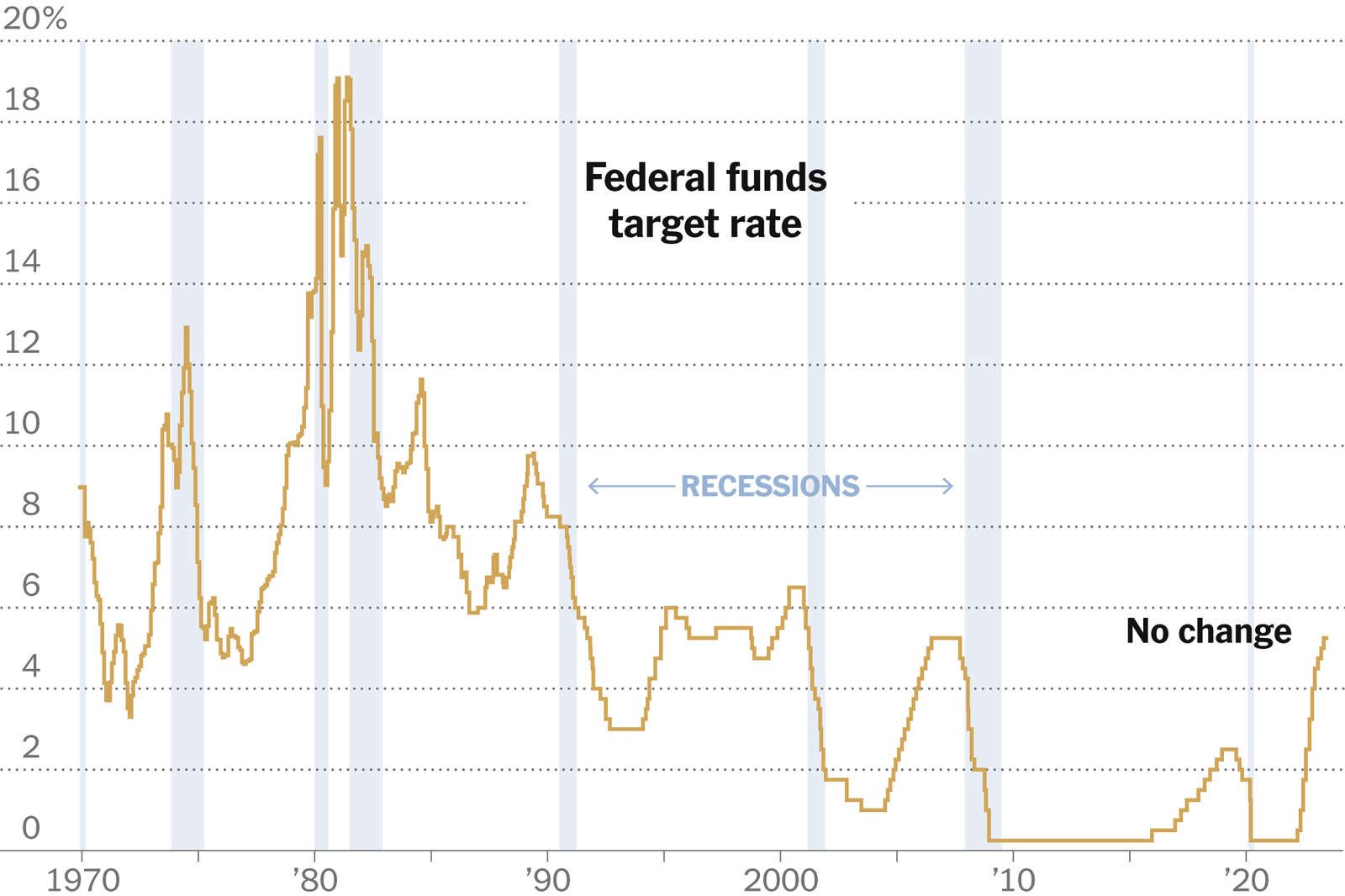
The Fed’s current policy stance is emerging from the most aggressive tightening cycle since the early 1980s, a response to post-pandemic inflation that peaked at over 9%. As we look to the “next move,” the FOMC is navigating a complex trifecta of objectives: taming inflation, maintaining full employment, and ensuring financial stability.
2.1 The Data-Dependent Mandate: Inflation vs. Employment
The Fed’s dual mandate is to achieve maximum employment and stable prices (2% inflation). The battle against inflation has been the primary driver for the past two years. Key indicators the Fed is watching include:
- Core PCE Inflation: The Fed’s preferred gauge, which strips out volatile food and energy prices. The trajectory towards the 2% target is its primary focus.
- The Labor Market: Wage growth, as measured by the Employment Cost Index (ECI) and Average Hourly Earnings, is a critical input. A persistently tight labor market and rising wages can fuel service-sector inflation, making the “last mile” of disinflation the most difficult.
- Services Inflation vs. Goods Inflation: Goods inflation has largely normalized, but services inflation (shelter, healthcare, hospitality) remains sticky, driven heavily by wage pressures.
The “next move” is contingent on the evolution of this data. The base case as of mid-2024 is a patient hold at a restrictive level, followed by a slow, methodical cutting cycle once inflation is convincingly tamed.
2.2 The Global Context: A Diverging Path
The Fed does not operate in a vacuum. The policies of other major central banks create relative opportunities that influence capital flows.
- The European Central Bank (ECB): May cut rates before or in tandem with the Fed, potentially weakening the Euro and reinforcing dollar strength.
- The Bank of Japan (BOJ): After years of ultra-loose policy, the BOJ is cautiously normalizing. However, its rates will remain miniscule compared to the U.S. for the foreseeable future, maintaining a powerful yield differential that favors dollar assets.
- Emerging Markets (EM): Many EM central banks hiked rates preemptively and aggressively. They now have room to cut, but if they cut too quickly or if the Fed remains hawkish, it could trigger capital outflows and currency weakness in those nations, ironically fueling more “flight to quality” flows into the U.S.
This global divergence means that even a pause or a slower cutting cycle from the Fed can be as impactful as a hike, if it widens the policy gap with the rest of the world.
Part 3: The Reshaping of Capital Flows – Where the Money is Going
So, how are these high-for-longer rates and the anticipation of the Fed’s next move actively reshaping capital flows into the USA? The impact is visible across multiple asset classes.
3.1 Direct Treasury Inflows: The Unambiguous Winner
The most direct beneficiary of higher U.S. rates is the U.S. government debt market.
- Foreign Official Holdings: Central banks and sovereign wealth funds, particularly from export-heavy nations like Japan and China, are significant holders of U.S. Treasuries. Higher yields make these holdings more attractive, supporting demand for U.S. debt financing.
- Private Institutional Demand: Pension funds, insurance companies, and asset managers globally are reallocating their fixed-income portfolios. The ability to secure a 5%+ yield on “risk-free” 2-year Treasuries is a powerful draw, pulling capital away from lower-yielding European or Japanese government bonds.
The Implication: Strong demand for U.S. debt helps the Treasury finance its deficit at manageable interest rates, a critical element of fiscal stability.
3.2 The Corporate Capital Conundrum: Debt vs. Equity
The picture for corporate investment is more nuanced.
- Foreign Direct Investment (FDI): High interest rates increase the cost of capital for long-term projects like building factories or acquiring companies. This can have a cooling effect on FDI, as multinational corporations may delay or scale back U.S. expansion plans due to expensive financing.
- Corporate Debt Markets: While higher rates make it more expensive for U.S. corporations to issue new bonds, they also create a vibrant market for foreign buyers. Investment-grade U.S. corporate bonds now offer yields that are compelling on a global scale, attracting income-focused international investors.
- Equity Markets: High rates present a headwind for equity valuations, as future earnings are discounted at a higher rate. This particularly pressures growth and tech stocks. However, a strong dollar can boost the translated earnings of U.S. multinationals. The net effect is a rotation within the market. “Bond-proxy” sectors like utilities may struggle, while large, cash-rich companies with strong balance sheets become more attractive to global investors seeking quality and stability.
3.3 The Real Estate Recalibration
Real estate is highly sensitive to interest rates.
- Commercial Real Estate (CRE): This sector faces significant challenges. Higher borrowing costs depress property valuations and make refinancing existing debt difficult. Foreign investment in U.S. office and retail spaces has cooled considerably. However, this is creating a bifurcation: distressed debt funds and opportunistic investors, including those from abroad, are beginning to circle, preparing to deploy capital at discounted prices.
- Residential Real Estate: While high mortgage rates have dampened the broader market, all-cash purchases remain a significant factor. A strong U.S. dollar and political instability elsewhere can make U.S. residential property—from Miami condos to California homes—a attractive safe-haven asset for wealthy foreign nationals, supporting certain high-end markets.
Part 4: Strategic Implications and Long-Term Outlook
The redirection of global capital is not a temporary phenomenon; it has strategic implications for the U.S. and global economy.
4.1 The “Higher for Longer” Equilibrium
The pre-Global Financial Crisis era of persistently low rates may be over. Structural forces like deglobalization, larger fiscal deficits, and the green energy transition are inherently inflationary. If the neutral interest rate (r*) has permanently shifted higher, the U.S. may maintain a positive real yield advantage for years to come. This would cement its status as a perennial magnet for global capital, fundamentally altering global investment patterns.
4.2 The Dollar’s Exorbitant Privilege – Reinforced
The U.S. dollar’s status as the world’s primary reserve currency is reinforced, not weakened, by this cycle. The ability to offer high yields, deep markets, and safety is a triumvirate that no other country can currently match. This “exorbitant privilege” allows the U.S. to finance itself more easily and project financial power, but it also places a burden of responsibility on the Fed to manage its policies with a view to global repercussions.
4.3 Navigating the Risks: Asset Bubbles and Global Instability
Sustained capital inflows are not without risk. They can lead to:
- Asset Price Inflation: Concentrated inflows into U.S. tech stocks or government debt could create pockets of overvaluation.
- Global Fragility: As capital leaves emerging markets for the safety of U.S. yields, it can trigger currency crises and debt defaults in vulnerable economies, potentially creating a feedback loop of global risk-off sentiment.
The Fed’s “next move” must therefore be calibrated not only for the U.S. economy but with an awareness of its powerful spillover effects.
Conclusion: The Center of Gravity Holds
The Federal Reserve’s interest rate decisions remain the single most powerful force in directing the tidal flows of global capital. Its “next move”—whether a cut, a hold, or a resumption of hikes—will be dissected in trading desks from London to Singapore, determining the cost of capital for nations and corporations worldwide.
The current environment of restrictive U.S. policy is acting as a powerful magnet, pulling capital into U.S. Treasury bonds and quality assets, strengthening the dollar, and reinforcing America’s central role in the financial system. While this presents challenges for certain sectors like commercial real estate and foreign-direct investment, it ultimately provides the U.S. with a significant source of funding and economic stability in a turbulent world.
For global investors, the message is clear: ignore the Fed’s signal at your peril. Its decisions will continue to define the risk-return landscape for the foreseeable future, ensuring that the flow of capital to American shores remains a dominant narrative in the story of global markets.
Read more: Beyond China: US Investors’ Guide to Navigating India’s Stock Market Boom
Frequently Asked Questions (FAQ)
Q1: I’m a European investor. Why should I care about the U.S. federal funds rate?
The federal funds rate is the benchmark for global dollar funding. It directly affects:
- The value of your Euro-based investments when converted to/from USD.
- The yield you can get on “safe” U.S. assets like Treasuries compared to European bonds.
- The valuation of U.S. and global growth stocks in your portfolio. A change in U.S. rates re-prices risk assets globally.
Q2: If the Fed starts cutting rates, will that cause the Dollar to crash?
Not necessarily. A controlled cutting cycle in response to conquered inflation would likely lead to a gradual weakening of the dollar. However, a “crash” is unlikely because:
- Other central banks (like the ECB) would likely be cutting simultaneously.
- The U.S. dollar’s safe-haven status is structural. If rate cuts are triggered by a U.S. recession, a global flight to safety could paradoxically strengthen the dollar.
Q3: How do higher U.S. rates hurt emerging markets?
They create a triple threat:
- Capital Outflows: Investors pull money out of emerging markets to seek higher, safer yields in the U.S.
- Currency Depreciation: This selling pressure weakens emerging market currencies, making it more expensive for them to import goods and service their U.S. dollar-denominated debt.
- Tighter Financial Conditions: To prevent a currency collapse and curb inflation, their central banks may be forced to keep rates high, stifling their own domestic economic growth.
Q4: What is the “neutral” interest rate (r*), and why does it matter?
The neutral rate (or r-star) is the theoretical federal funds rate that neither stimulates nor restrains the economy when inflation is at target. It is unobservable and must be estimated. If the neutral rate has risen permanently due to factors like higher government debt and robust investment demand, it means the Fed can hold rates at a higher level (e.g., 3-4%) without slowing the economy down. This has huge implications for long-term capital flows and asset valuations.
Q5: As a U.S.-based saver, are there any benefits to this environment?
Absolutely. The most direct benefit is for savers and conservative investors. After years of near-zero returns, you can now earn a meaningful yield on:
- High-yield savings accounts and money market funds (which invest in short-term Treasuries).
- Certificates of Deposit (CDs).
- Directly purchased U.S. Treasury bills, notes, and bonds.
This provides a viable, low-risk source of income that was absent for over a decade.