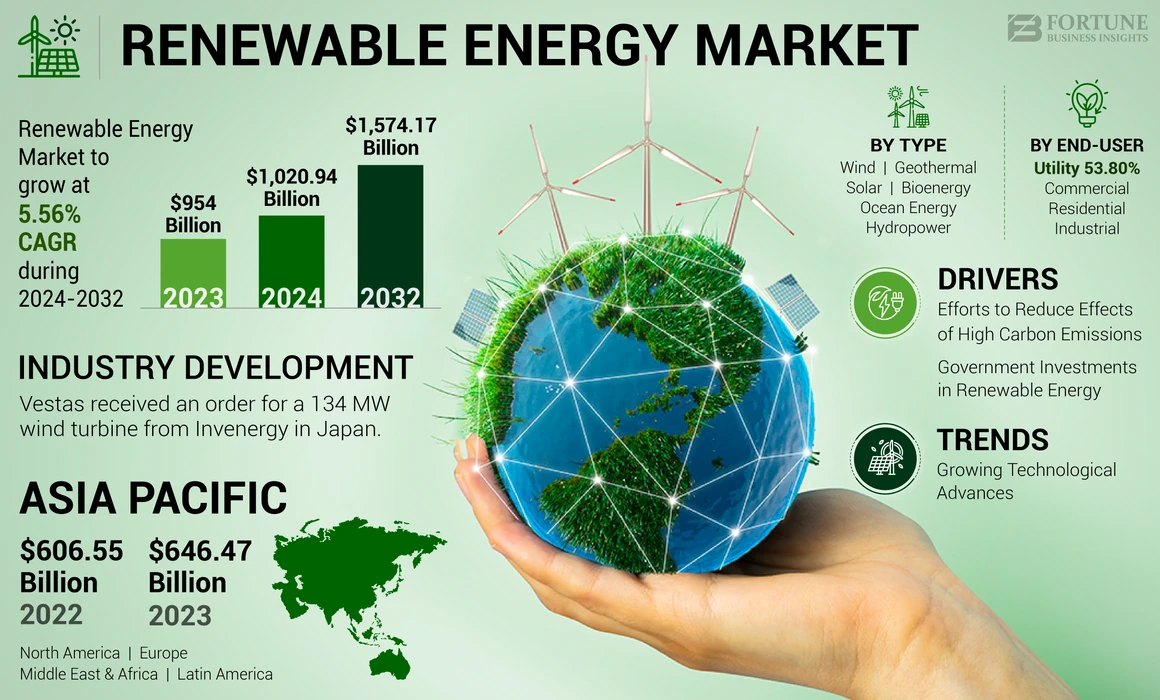
For decades, the color green has been synonymous with money, growth, and prosperity. Today, it has taken on a powerful dual meaning. “Going green” is no longer just a slogan for environmental activists; it has become a core tenet of a profound economic transformation. The United States is in the midst of a historic pivot, a massive reallocation of capital, innovation, and labor toward building a sustainable, low-carbon future. This shift is embodied by the explosive growth of the renewable energy and clean technology sector—a dynamic engine of economic development that is reshaping the nation’s industrial landscape, energy security, and global competitiveness.
This article provides a deep, analytical overview of this growth, moving beyond headlines to explore the key drivers, pivotal technologies, economic impacts, and persistent challenges. It is a story not just of environmental imperative, but of unprecedented market forces, technological disruption, and strategic national realignment.
Part 1: The Foundations of a Revolution – From Niche to Mainstream
The journey of renewable energy in the U.S. has been one of fits and starts. Following the oil crises of the 1970s, interest in alternatives like solar and wind flickered but largely remained on the fringes, hampered by high costs and limited policy support. The true turning point began in the early 2000s and has accelerated dramatically in the last decade.
Several foundational pillars have supported this transition:
1. The Plummeting Cost Curve: The most powerful driver has been pure economics. The cost of renewable energy technologies has fallen at a staggering rate.
- Solar Photovoltaics (PV): The cost of solar PV modules has dropped by over 90% since 2010. What was once one of the most expensive sources of electricity is now, in many regions, the cheapest form of new-built power generation, undercutting even fossil fuels.
- Onshore Wind: Similarly, the levelized cost of energy (LCOE) for onshore wind has fallen by over 70% in the same period, thanks to larger, more efficient turbines and improved project management.
- Energy Storage: The cost of lithium-ion batteries, the backbone of grid-scale and electric vehicle (EV) storage, has plummeted by nearly 90% since 2010. This is a critical enabler, solving the intermittency issue of solar and wind.
This cost deflation is a classic example of Wright’s Law: for every cumulative doubling of production, costs decline by a consistent percentage. As global manufacturing scaled, driven by policy in Europe and China initially, prices fell, creating a virtuous cycle of increased deployment and further cost reductions.
2. Bipartisan, Multi-Layered Policy Support: While often politically contentious, a series of federal and state policies have been instrumental in de-risking investments and creating market certainty.
- Investment Tax Credit (ITC) and Production Tax Credit (PTC): These long-standing federal incentives have been the bedrock of renewable growth. The ITC provides a tax credit for a percentage of the cost of a solar system, while the PTC provides a per-kilowatt-hour credit for electricity generated by wind and other qualifying renewables. Their repeated extensions by Congress have provided the stability needed for long-term project planning.
- State Renewable Portfolio Standards (RPS): Over 30 states, plus Washington D.C. and territories, have implemented RPS policies, which mandate that a certain percentage of electricity sold by utilities comes from renewable resources by a specific date. These policies create a guaranteed, regulated demand for renewables.
- The Inflation Reduction Act (IRA) of 2022: This is arguably the most significant climate legislation in U.S. history. It supercharges the clean energy transition by providing an estimated $369 billion in clean energy and climate investments. Its structure is transformative: it makes the ITC and PTC long-term (10+ years), adds bonus credits for domestic manufacturing, and energy communities, and extends incentives to a wider range of technologies, including energy storage, clean hydrogen, and carbon capture. The IRA is not just a climate bill; it is a deliberate industrial strategy to onshore the clean energy supply chain.
Part 2: The Clean Tech Ecosystem – More Than Just Wind and Solar
While wind and solar are the headline acts, the “clean tech” sector is a vast and interconnected ecosystem. Its growth is creating entirely new industries and revitalizing old ones.
A. The Pillars of Power Generation:
- Solar Energy: The U.S. solar industry has experienced explosive growth, with total installed capacity now exceeding 175 gigawatts (GW)—enough to power 33 million homes. The sector encompasses everything from massive utility-scale solar farms that act as power plants to commercial rooftop installations and residential solar. The rise of “community solar” is also expanding access to renters and those with unsuitable roofs.
- Wind Energy: With over 147 GW of capacity installed, wind is a powerhouse, particularly in the “Wind Belt” stretching from Texas to the Dakotas. Offshore wind represents the next frontier, with massive potential along the Atlantic and Pacific coasts. Projects like Vineyard Wind off the coast of Massachusetts mark the beginning of a new industry that will create thousands of maritime, construction, and maintenance jobs.
- Geothermal Energy: Often called the “forgotten renewable,” geothermal is experiencing a renaissance. Next-generation technologies, known as Enhanced Geothermal Systems (EGS), aim to tap the Earth’s heat anywhere, not just at natural hotspots. The Department of Energy is investing heavily in making geothermal a ubiquitous, 24/7 clean power source.
- Hydropower & Nuclear: While existing hydropower is a stalwart of zero-carbon baseload power, growth is limited. Nuclear power, despite challenges with cost and waste, is being re-evaluated for its role in providing reliable, carbon-free energy. Advanced nuclear technologies, including Small Modular Reactors (SMRs), are in development, promising safer and more flexible designs.
B. The Enablers: Grid Modernization and Energy Storage
A clean grid requires more than just clean generators. It needs a nervous system.
- Energy Storage: The rapid scaling of battery energy storage systems (BESS) is the game-changer. These systems store excess solar and wind power and discharge it when the sun isn’t shining or the wind isn’t blowing. They provide critical grid services, enhance resilience, and allow for a much higher penetration of renewables. The U.S. energy storage market is projected to grow exponentially this decade.
- Grid Modernization: The U.S. electrical grid is aging and was built for a one-way flow of power from large centralized plants. The future grid must be smarter, more resilient, and more dynamic—a “digital grid.” This involves deploying smart meters, advanced sensors, and power electronics to manage two-way energy flows from distributed resources like rooftop solar and EVs. Significant federal funding through the Bipartisan Infrastructure Law is accelerating this essential modernization.
C. The Demand Side: Electrification and Clean Fuels
Decarbonizing the power sector is only half the battle. The other half is cleaning up how we use energy.
- Transportation Electrification: The automotive industry is undergoing its most significant transformation in a century. Led by Tesla but now embraced by every major automaker, the shift to Electric Vehicles (EVs) is accelerating. U.S. EV sales have surpassed 1 million units annually, supported by consumer tax credits in the IRA. This transition drives demand for batteries, charging infrastructure, and clean electricity, while reducing air pollution and reliance on oil.
- Clean Hydrogen: Hydrogen, when produced with clean electricity (green hydrogen) or with carbon capture (blue hydrogen), is a potential clean fuel for hard-to-electrify sectors like heavy industry (steel, cement), heavy-duty trucking, and long-duration energy storage. The IRA’s hydrogen production tax credit is designed to make clean hydrogen cost-competitive.
- Carbon Capture, Utilization, and Storage (CCUS): For existing industrial processes that are difficult to decarbonize, CCUS technologies capture CO2 emissions at the source and either utilize them in products or store them deep underground. While controversial among some environmental groups, it is seen by many experts as a necessary tool for achieving net-zero emissions.
Part 3: The Economic Engine – Jobs, Investment, and Geopolitics
The narrative that climate action is bad for the economy has been decisively overturned. The clean energy transition is a massive economic opportunity.
1. Job Creation and the New Collar Workforce:
The renewable energy sector is a significant and fast-growing employer. According to the U.S. Department of Energy, jobs in clean energy grew 3.9% in 2022, outpacing overall U.S. employment growth. These are not just isolated jobs; they span a wide range of fields and skill levels:
- Manufacturing: Producing solar panels, wind turbine blades, EV batteries, and electrolyzers for hydrogen.
- Construction & Installation: Building solar farms, erecting wind turbines, and installing EV charging stations.
- Professional Services: Engineers, project developers, lawyers, and financiers.
- Maintenance & Operations: Technicians to maintain wind farms and grid infrastructure.
Many of these are “new collar” jobs—roles that may not require a four-year degree but demand specialized training, often offering high wages and pathways for advancement. This creates opportunities in communities that have been left behind by previous economic shifts.
2. Massive Capital Investment and Supply Chain Onshoring:
The IRA and Bipartisan Infrastructure Law have triggered a wave of announced private investment. Since the IRA’s passage, companies have announced hundreds of billions of dollars in new clean energy and EV manufacturing projects in the U.S.
- Battery Gigafactories: Dozens of new battery plants are being built by automakers and battery companies, primarily in the Southeast and Midwest, creating a domestic battery supply chain that was previously concentrated in Asia.
- Solar Manufacturing: The IRA’s domestic content bonuses are incentivizing a resurgence in U.S. solar panel and component manufacturing.
- Clean Tech Hubs: Regions are specializing, such as the “Battery Belt” emerging across Georgia, Michigan, Kentucky, and Tennessee.
This onshoring is not just an economic strategy; it is a geopolitical one. It aims to reduce dependence on China for critical minerals and clean tech components, enhancing U.S. energy security and economic resilience.
3. Benefits for Rural America:
Renewable energy is a boon for rural communities. Wind and solar farms are often built on agricultural land, providing farmers and ranchers with a stable, drought-proof source of lease revenue. These projects also expand the local tax base, funding schools, roads, and emergency services.
Read more: Earnings Season Volatility: A Swing Trader’s Playbook for Trading US Company Reports
Part 4: Navigating the Headwinds – Challenges and Hurdles
Despite the powerful momentum, the path forward is not without significant obstacles.
- Gridlock on the Grid: The single biggest bottleneck for new renewable projects is the lack of transmission capacity and lengthy interconnection queues. It can take a decade or more to plan, permit, and build a major new transmission line. Thousands of projects, representing a massive amount of clean energy, are stuck in these queues, waiting for grid connection approval. Streamlining this process is a critical and complex challenge.
- Supply Chain and Critical Minerals: While onshoring is a goal, the supply chain for critical minerals like lithium, cobalt, and nickel remains concentrated and faces environmental and social governance concerns. Building a responsible, diversified supply chain is a long-term endeavor.
- Permitting Reform: The federal and state permitting process for energy projects, including renewables, is often slow and duplicative. Finding a balance between necessary environmental reviews and timely project deployment is a key political and policy challenge.
- Local Opposition and Siting: While broadly popular, specific renewable projects can face “Not In My Backyard” (NIMBY) opposition related to land use, viewsheds, or other local concerns. Transparent community engagement and equitable benefit-sharing are essential to overcoming this.
- The Inflation and Interest Rate Environment: High inflation and rising interest rates have increased the capital costs for large-scale renewable projects, temporarily squeezing margins and slowing some development.
Part 5: The Road Ahead – A Future Powered by Innovation
The U.S. clean energy sector has moved from a niche alternative to an unstoppable mainstream force. Its growth is now driven by a powerful confluence of economic competitiveness, technological maturity, and strategic policy.
The road to a fully decarbonized economy by 2050 is steep, but the direction is clear. The continued success of this transition will depend on:
- Sustaining Bipartisan Support: Ensuring that the core pillars of the IRA and Bipartisan Infrastructure Law remain stable to provide long-term investor confidence.
- Modernizing the Grid: Making significant, sustained investments in national transmission infrastructure and modernizing grid operations.
- Fostering Innovation: Continuing public and private R&D in next-generation technologies like advanced geothermal, green hydrogen, and long-duration energy storage.
- Ensuring an Equitable Transition: Ensuring that the economic benefits of the clean energy transition reach fossil-fuel-dependent communities, low-income households, and frontline communities historically burdened by pollution.
The color green has truly been redefined. Investing in a sustainable planet is now synonymous with investing in a prosperous, secure, and innovative American economy. The green transition is, unequivocally, the new engine of American growth.
Read more: The 1-Hour Power Hour: A Day Trader’s Strategy for Capturing the Midday Moves
Frequently Asked Questions (FAQ) Section
Q1: Is renewable energy truly reliable enough to power the entire country?
A: This is a common and important question. The reliability challenge, often called “intermittency,” is being solved through a portfolio approach. No single resource is expected to do the job alone. A diversified mix of solar, wind, hydropower, geothermal, and nuclear, all connected by a modernized grid and backed by extensive energy storage (batteries, pumped hydro, etc.), can create a highly reliable system. Furthermore, advanced forecasting and demand-response programs (where consumers voluntarily reduce usage during peak times) add flexibility. Studies from NOAA, Princeton, and Stanford have all shown that a deeply decarbonized, reliable grid is technically and economically feasible.
Q2: What is the “clean tech” sector, and how is it different from “renewable energy”?
A: Think of it as a hierarchy. Renewable Energy refers specifically to the sources of power generation that are naturally replenished, like sunlight, wind, and heat from the earth (solar, wind, geothermal, hydropower). Clean Tech is a much broader umbrella term. It encompasses renewable energy plus all the technologies, products, and services that improve environmental performance. This includes energy storage, electric vehicles, energy efficiency software, smart grid technology, green hydrogen, carbon capture, and sustainable agriculture tech. Renewable energy is a major subset of the larger clean tech universe.
Q3: I keep hearing about the Inflation Reduction Act (IRA). How is it different from previous climate policies?
A: The IRA is a fundamental game-changer for three key reasons:
- Longevity and Certainty: It provides clean energy tax credits for a full decade, unlike previous short-term extensions that created a boom-bust cycle.
- Technology-Neutrality: It extends incentives to a wider array of technologies beyond just wind and solar, including standalone energy storage, clean hydrogen, and carbon capture.
- Industrial Policy: It is deliberately designed to build a domestic supply chain. It offers bonus tax credits for using U.S.-made equipment and for siting projects in “energy communities” (areas formerly dependent on fossil fuels). It’s not just subsidizing deployment; it’s actively building a new U.S. manufacturing base.
Q4: Are the jobs in the clean energy sector good, high-paying jobs?
A: Yes, the data shows that they are. According to the U.S. Department of Energy, many clean energy jobs pay above the national median wage. For example, wind turbine service technicians and solar installers are among the fastest-growing occupations with competitive salaries. Furthermore, many of these jobs are in manufacturing and construction, sectors with strong union representation and established pathways to apprenticeships and skilled trades. The focus on domestic manufacturing also helps ensure these jobs are rooted in local communities.
Q5: What can an average person do to support or benefit from this transition?
A: Individual actions, when aggregated, create significant demand and political will. Key actions include:
- Electrify Your Home: Consider switching from a gas furnace to an electric heat pump for heating and cooling, and from a gas stove to an induction cooktop.
- Go Electric on the Road: If and when you’re in the market for a new car, test drive an EV. Take advantage of federal and state EV purchase incentives.
- Explore Residential Solar: Get a quote for rooftop or community solar to power your home with clean energy and potentially lower your electricity bill.
- Improve Home Efficiency: Simple steps like sealing drafts, adding insulation, and using a smart thermostat can reduce your energy consumption and costs.
- Advocate: Engage with your local and state representatives to support policies that modernize the grid, streamline permitting for clean energy, and invest in community resilience.
Q6: What is the biggest challenge facing the growth of renewable energy right now?
A: While there are several challenges, the most immediate and severe bottleneck is the lack of transmission capacity and the clogged interconnection queues. The U.S. grid was built for a different era and is not equipped to handle the flow of power from new, often remotely located renewable resources to the population centers that need the electricity. Building new transmission lines is a slow, complex process involving multiple jurisdictions and stakeholders. Solving this gridlock is the paramount challenge to unlocking the next wave of clean energy growth.