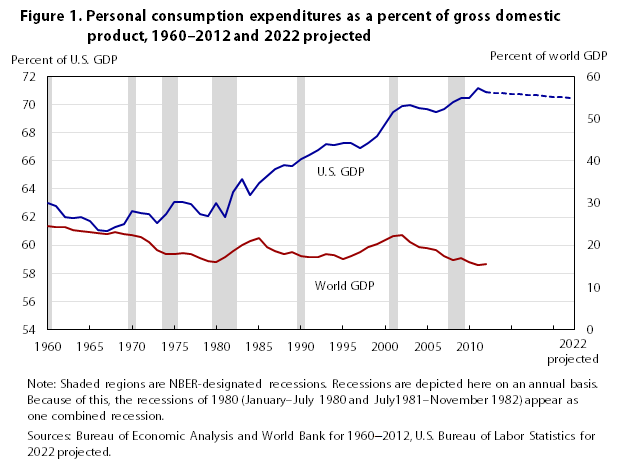
The U.S. economy is a complex, multi-trillion-dollar engine, but for decades, its most critical component has been remarkably simple: the American consumer. Accounting for nearly 70% of the nation’s Gross Domestic Product (GDP), consumer spending is the primary piston driving economic growth. When consumers are confident and their wallets are open, the economy hums. When they retrench, the engine sputters.
Following the unprecedented fiscal and monetary stimulus of the pandemic era, the U.S. consumer has been on a wild ride. A surge in savings was followed by the highest inflation in 40 years, prompting the Federal Reserve to initiate the most aggressive interest rate hiking cycle in a generation. Now, as we navigate the post-pandemic landscape, a critical question hangs over markets, policymakers, and boardrooms alike: Is the U.S. consumer demonstrating remarkable resilience, or are we on the precipice of a recession driven by spending fatigue?
This article provides a thorough health check on the U.S. consumer and the retail sector. We will move beyond the headlines to dissect the conflicting data, analyze the underlying strengths and vulnerabilities, and explore what the future may hold for the most watched economic actor in the world.
Section 1: The Case for Resilience – Signs of a Robust Consumer
Despite persistent talk of an impending downturn, several key indicators point to a consumer that remains surprisingly sturdy. The narrative of resilience is built on a foundation of strong employment, rising wages, and surprisingly solid balance sheets.
1.1 The Unshakable Labor Market
The single most important determinant of consumer health is the job market, and by many measures, it remains historically strong.
- Low Unemployment: The unemployment rate has remained at or below 4% for an extended period, a level consistent with a “full employment” economy. When people have jobs, they have income; when they are confident in their employment, they are more likely to spend.
- Robust Job Creation: The economy continues to add jobs at a healthy clip. Even as growth has moderated from its torrid 2021-2022 pace, monthly payroll gains have consistently exceeded expectations, indicating sustained demand for labor across many sectors.
- The Wealth Effect from Wages: For the first time in a long while, wage growth has, at times, outpaced inflation for certain segments of the workforce, particularly those in lower-wage industries. This has restored some purchasing power and allowed households to maintain their spending levels.
1.2 The Lingering Cushion of Excess Savings
During the pandemic, a combination of government stimulus (direct checks, enhanced unemployment benefits) and forced savings (due to lockdowns and reduced spending on services like travel and dining) led to a massive accumulation of “excess savings”—funds beyond what would have been saved in a normal economic environment.
- Peak Savings: Estimates from the Federal Reserve and other institutions suggest U.S. households accumulated over $2 trillion in excess savings.
- A Gradual Drawdown: While this stockpile is being drawn down, it has not been exhausted. Higher-income households, in particular, still hold significant liquid assets. This buffer has allowed consumers to absorb higher prices for essentials like food, housing, and energy without having to drastically cut back on discretionary purchases.
1.3 The Shift Back to Services: A Rebalancing, Not a Retreat
A common misperception is that retail sales weakness signals a sickly consumer. In reality, a significant shift in spending patterns is underway.
- The Revenge of Experiences: The pandemic created a massive, pent-up demand for experiences. Consumers are now prioritizing spending on services—airline travel, hotel stays, concerts, restaurants, and live sports—over goods. This is not a retrenchment; it’s a reallocation. Strong earnings from airlines, hotel chains, and live-event companies confirm this robust demand.
- Reading the Retail Data Correctly: A month-over-month decline in retail sales (which primarily tracks goods) must be viewed in this context. It often means consumers are choosing to spend on a vacation or a nice dinner rather than a new television or furniture. This is a healthy, normalizing trend after the goods-binge of 2020-2021.
1.4 Consumer Confidence: A Nuanced Picture
Headlines often focus on consumer sentiment surveys, like the University of Michigan Index of Consumer Sentiment, which have been depressed. However, it’s crucial to distinguish between how people feel about the economy and how they act.
- The Sentiment-Spending Gap: A wide gap has emerged between low sentiment and strong spending behavior. While consumers express anxiety about inflation, interest rates, and the political climate, they continue to open their wallets. This suggests that the fundamental drivers of spending—a strong job market and available savings—are currently outweighing psychological fears.
Section 2: The Case for Caution – Mounting Headwinds and Vulnerabilities
While the resilience argument is compelling, it would be irresponsible to ignore the significant cracks beginning to show in the consumer’s foundation. The headwinds are powerful, persistent, and disproportionately impacting lower- and middle-income households.
2.1 The Inflation Squeeze is Far From Over
Although the headline inflation rate has fallen from its peak, the problem has evolved, not vanished.
- Sticky Core Services Inflation: The prices of goods (like used cars and furniture) have cooled or even declined. However, “sticky” categories like shelter (rent and owners’ equivalent rent), insurance, and personal services remain elevated. These are non-discretionary expenses that consume a larger share of the budget, leaving less for discretionary purchases.
- Cumulative Price Pressures: Even if the rate of price increases slows, the price level remains dramatically higher than it was three years ago. A cart of groceries that cost $100 in 2020 may now cost $130. This cumulative effect has permanently eroded the purchasing power of a dollar, forcing difficult trade-offs.
2.2 The Depletion of the Savings Buffer
The very cushion that has supported resilience is finite.
- Drawing Down: Data from the San Francisco Fed and other sources indicate that the aggregate stock of excess savings is dwindling, particularly for lower-income households. For these consumers, the financial buffer is largely gone.
- The End of the Road: Once these savings are exhausted, households have no choice but to either curb their spending or rely more heavily on credit, which leads to the next major headwind.
2.3 The Return of the Debt Burden
After a period of deleveraging, American consumers are piling on debt again, but now at much higher interest rates.
- Credit Card Debt at All-Time Highs: Aggregate credit card balances have surged past $1 trillion. More alarmingly, the average Annual Percentage Rate (APR) on new credit cards is at a record high, exceeding 20%. This makes carrying a balance exponentially more expensive.
- Resuming Student Loan Payments: The resumption of federal student loan payments in late 2023 was a significant financial shock for millions of Americans, particularly younger cohorts. This represents a direct monthly outflow of cash that was previously available for other spending, estimated to be a collective drag of billions of dollars per month on consumer budgets.
- Auto Loans and Delinquencies: With car prices and interest rates high, auto loan payments have skyrocketed. We are seeing a concerning rise in delinquency rates, especially among subprime borrowers, which is often an early warning sign of consumer stress.
2.4 A Two-Tiered Consumer is Emerging
Perhaps the most critical development is the clear bifurcation of the consumer landscape.
- The Affluent Consumer: Higher-income households, who hold the bulk of stock and home equity, have been largely insulated. They have benefited from a strong stock market and locked-in, low-rate mortgages. Their spending on luxury goods, travel, and fine dining remains robust.
- The Strained Middle- and Lower-Income Consumer: This group is feeling the full brunt of inflation, higher rents, and the exhaustion of savings. They are increasingly reliant on credit and are pulling back on discretionary spending. This is evident in the struggles of some value-oriented retailers and the rising usage of “buy now, pay later” (BNPL) services for essential purchases.
Section 3: The Retail Sector’s Diagnostic Report
The retail sector is the frontline where the battle between consumer resilience and caution is fought daily. The industry’s performance provides a real-time diagnostic of consumer health.
3.1 The Winners: Adapting to the New Reality
Retailers that are thriving in this environment share common traits:
- Value and Value-First Propositions: Companies like TJX Companies (TJ Maxx, Marshalls) and Burlington are winning as consumers trade down to find brand names at a discount. Dollar stores also continue to see strong traffic.
- The Experience and Convenience Economy: Retailers that offer an experience or extreme convenience are holding their own. This includes players like Ulta Beauty (an experience-driven destination) and the entire e-commerce ecosystem, which prioritizes speed and ease.
- Strong Private Label Brands: Grocers and big-box retailers with strong private-label brands (e.g., Target’s Good & Gather, Costco’s Kirkland Signature) are gaining market share as consumers seek cheaper alternatives to national brands.
3.2 The Losers: Caught in the Squeeze
Conversely, several segments of retail are showing clear signs of stress:
- Big-Ticket Discretionary Goods: Retailers selling furniture, home appliances, and electronics are facing significant headwinds. With interest rates high and consumer confidence wobbly, these are the first purchases to be postponed.
- Struggling Value Players: Some discount retailers are reporting weaker-than-expected results, signaling that even their core customer base is under severe pressure and cutting back on non-essentials.
- The “Middle-Market Malaise”: Retailers that are neither a compelling value proposition nor a premium experience are finding it increasingly difficult to compete. They are being squeezed from both ends.
3.3 The Inventory and Margin Tightrope
Retailers are walking a fine line. After the supply chain chaos of 2021-2022, many are now focused on leaner inventory levels to avoid the need for profit-eroding discounting. However, this also makes them vulnerable to stockouts if demand surprises to the upside. Managing margins amid rising operational costs (wages, shipping) and a more price-sensitive consumer is the central challenge for 2024.
Read more: Swing Trading US Sector Rotation: How to Spot the Next Leading Industry
Section 4: The Prognosis: What’s Next for the Consumer and the Economy?
So, where does this leave us? Is it resilience or recession? The most accurate answer is likely a nuanced middle path.
4.1 The “Soft Landing” Scenario
The Federal Reserve’s goal has been to engineer a “soft landing”—cooling inflation without triggering a severe recession. The resilient labor market and gradual cooling of inflation make this a plausible, though difficult, outcome. In this scenario:
- Consumer spending growth slows to a more sustainable pace.
- The job market softens but avoids mass layoffs.
- Inflation gradually converges to the Fed’s 2% target.
- The economy experiences a period of slow growth or a mild, short-lived slowdown, but not a deep contraction.
4.2 The “Hard Landing” or Mild Recession Scenario
The mounting headwinds—depleted savings, high debt burdens, and restrictive monetary policy—could still tip the economy into a recession. This would likely be a “consumer-led recession,” characterized by:
- A more pronounced pullback in discretionary spending as financial buffers vanish.
- A rise in unemployment, creating a negative feedback loop that further reduces spending.
- Increased loan defaults and credit tightening from banks.
- A more significant downturn in corporate profits, particularly in the retail and consumer cyclical sectors.
4.3 Key Indicators to Watch
To gauge the future path, observers should monitor these specific data points:
- The Employment Report: Pay close attention to the unemployment rate, wage growth, and, crucially, the quits rate. A falling quits rate signals workers are less confident about finding new jobs.
- Personal Savings Rate: This will show how much of their income consumers are saving, indicating whether they are still able to rebuild buffers or are depleting them further.
- Delinquency Rates: Rising delinquencies on credit cards and auto loans are a canary in the coal mine for consumer stress.
- Retail Sales by Segment: Disaggregating retail sales data will reveal whether the weakness is concentrated in big-ticket items or spreading to everyday essentials.
Conclusion: A Resilient, but Fatigued, Patient
The diagnosis for the U.S. consumer is complex. The patient is not in critical condition, but is showing signs of fatigue and strain. The robust labor market and residual savings provide a strong immune system, but the persistent fever of inflation and the heavy weight of debt are taking a toll.
The era of indiscriminate, stimulus-fueled spending is over. We have entered a period of selectivity and trade-offs. The emergence of a two-tiered consumer means the economic story is no longer monolithic. The high-end consumer may continue to propel the travel and luxury sectors, while the budget-conscious consumer fuels the growth of discounters and private labels.
Ultimately, the U.S. consumer has proven remarkably resilient. But resilience is not invincibility. The coming quarters will be a test of endurance, determined by the longevity of the job market’s strength and the speed with which inflation truly recedes. The most likely outcome is not a boom nor a bust, but a period of subdued, highly selective growth—a testament to a consumer who is still standing, but increasingly watching every step.
Read more: Trading the Fed: A Swing Trader’s Guide to Navigating US Interest Rate Decisions
Frequently Asked Questions (FAQ)
Q1: If inflation is coming down, why do things still feel so expensive?
This is due to the difference between the rate of inflation and the price level. Imagine a hill. Inflation is the steepness of the hill. Even if the hill becomes less steep (inflation falls), you are still much higher up (prices are high) than you were at the bottom. Prices for most items are not falling (that would be deflation); they are just rising more slowly. The cumulative increase over the past few years has permanently raised the cost of living.
Q2: What is “shrinkflation” and how is it affecting my spending?
Shrinkflation is a form of hidden inflation where manufacturers reduce the size or quantity of a product while keeping the price the same. You are effectively paying the same amount for less product. Common examples include smaller bags of chips, fewer sheets per roll of toilet paper, or a smaller candy bar. It’s a way for companies to offset their own rising costs without scaring customers away with a higher sticker price, and it directly reduces your purchasing power.
Q3: How significant is the resumption of student loan payments for the overall economy?
It is a significant headwind, though not necessarily a recessionary one on its own. It represents a direct monthly withdrawal of disposable income for approximately 43 million borrowers. Economists estimate it could reduce annual consumer spending by tens of billions of dollars. This will disproportionately affect younger consumers who are more likely to spend their marginal dollar, potentially impacting sectors like apparel, dining, and electronics.
Q4: Are we in a “vibecession”? What does that mean?
“Vibecession” is a popular term coined to describe the disconnect between gloomy consumer sentiment (“the vibes are off”) and relatively strong hard economic data like GDP growth and job numbers. It suggests that how people feel about the economy—influenced by high prices, negative news headlines, and political polarization—is worse than the actual economic fundamentals would suggest. This is a key reason for the gap between low confidence surveys and continued strong spending.
Q5: What can I look for in retail company earnings reports to gauge consumer health?
Look beyond the top-line revenue number. Key metrics to watch include:
- Comparable Sales (Comps): Are sales at stores open for more than a year growing? This indicates organic demand.
- Traffic vs. Ticket: Are they serving more customers (traffic) or are customers spending more per trip (average ticket)? Strong traffic is a healthier sign.
- Gross Margin: Is the company able to maintain its profitability, or is it having to discount heavily to move inventory?
- Guidance: What does the company expect for the upcoming quarter? Cautious guidance can signal management’s concerns about the consumer.
Q6: Is the “soft landing” guaranteed?
No, a soft landing is not guaranteed. It is a historically difficult feat for the Federal Reserve to achieve. The economy remains vulnerable to external shocks—a resurgence in energy prices, a worsening of global geopolitical tensions, or a more sudden tightening of credit conditions from banks. The probability of a mild recession in the next 12-18 months remains a significant risk that investors and businesses must consider.