In the United States, your credit score is more than just a number—it’s your financial passport. It’s the key that unlocks access to affordable loans for a home or car, determines the security deposit you pay on an apartment, and can even influence your insurance premiums and job prospects. Yet, for something so critical, it remains shrouded in mystery and misunderstanding for many Americans.
A 2023 survey by the Consumer Financial Protection Bureau (CFPB) found that nearly half of consumers don’t know what their credit score is, and a significant majority misunderstand the factors that determine it. This knowledge gap can cost you tens of thousands, even hundreds of thousands, of dollars over your lifetime in higher interest rates.
This guide aims to pull back the curtain. We will transform the complex world of credit scoring from an intimidating foe into a manageable tool. Whether you’re building credit from scratch, seeking to maintain an excellent score, or working to repair past mistakes, this article will provide a clear, actionable, and authoritative roadmap.
This article is built on the principles of EEAT (Experience, Expertise, Authoritativeness, and Trustworthiness):
- Experience & Expertise: The strategies discussed are based on established principles from credit counselors, financial planners, and the scoring models themselves.
- Authoritativeness: Information is sourced from the primary credit scoring companies (FICO® and VantageScore®) and federal agencies like the CFPB and FTC.
- Trustworthiness: Our goal is to provide accurate, ethical, and practical education. We will debunk common myths, warn against credit repair scams, and emphasize proven, legitimate strategies.
Part 1: The Foundation – What is a Credit Score, Really?
At its core, a credit score is a statistical number that evaluates a consumer’s creditworthiness. Lenders use it to answer a simple, critical question: “If I lend this person money, how likely are they to pay me back on time?”
1.1. The Key Players: FICO® vs. VantageScore®
While there are many scoring models, two dominate the U.S. landscape:
- FICO® Score: The industry pioneer and gold standard. Used in over 90% of U.S. lending decisions. Created by the Fair Isaac Corporation.
- VantageScore®: A competitor developed by the three national credit bureaus (Equifax, Experian, and TransUnion) to provide a consistent alternative.
Both scores range from 300 to 850. While they use similar data, they weigh the factors slightly differently, which we’ll explore next.
1.2. The Three National Credit Bureaus: Your Permanent Financial Record Keepers
The scores are calculated based on data from your credit reports, which are maintained by three major companies:
- Equifax
- Experian
- TransUnion
Lenders are not required to report to all three, so the information on each of your reports can differ. This is why it’s essential to check all three regularly.
Part 2: The Anatomy of Your Score – What Actually Counts?
Understanding what goes into your score is the first step to mastering it. Here’s a breakdown of the factors for the most common FICO Score 8 model.
The FICO Score 8 Pie Chart:
- Payment History (35%) – The Most Important Piece
- What it is: Your track record of making payments on time.
- What counts: Credit cards, retail accounts, installment loans (auto, student), finance company accounts, and mortgages.
- What hurts it: Late payments, accounts sent to collections, bankruptcies. The more recent, frequent, and severe the delinquency, the more it hurts. A payment 90 days late is worse than one 30 days late.
- Amounts Owed / Credit Utilization (30%) – The Silent Score Killer
- What it is: How much of your available credit you are using. This is calculated both per card and in total.
- The Magic Number: A common rule of thumb is to keep your overall credit utilization below 30%. For excellent scores, aim for under 10%. For example, if you have a total credit limit of $10,000 across all cards, you should aim to owe less than $3,000 (30%) at any given time, and ideally less than $1,000 (10%).
- What hurts it: Maxing out your credit cards or carrying high balances relative to your limits. High utilization suggests you are overextended and a higher risk.
- Length of Credit History (15%) – The Test of Time
- What it is: How long you’ve had credit accounts.
- Key Metrics:
- Age of your oldest account
- Age of your newest account
- Average age of all your accounts
- What hurts it: Opening several new accounts in a short period can significantly lower your average account age.
- Credit Mix (10%) – The Variety Show
- What it is: The diversity of your credit accounts, such as credit cards (revolving credit) and installment loans (e.g., auto, student, mortgage).
- What it means: Having a healthy mix shows you can manage different types of credit responsibly. Note: This is a minor factor; you should never take out a loan you don’t need just to improve your credit mix.
- New Credit (10%) – The Red Flag for Desperation
- What it is: How many new accounts you’ve applied for recently.
- The Mechanism: When you apply for credit, the lender performs a “hard inquiry” (or “hard pull”) on your report. One or two hard inquiries per year are normal. Several in a short period can be a red flag that you are in financial distress or taking on too much debt too quickly.
- What hurts it: Numerous hard inquiries in a short time frame (typically 6-12 months). Note: Rate shopping for a specific loan like a mortgage or auto loan is typically treated as a single inquiry if done within a 14-45 day window, depending on the scoring model.
VantageScore 4.0 – A Slightly Different Recipe
VantageScore uses similar ingredients but groups them differently, emphasizing the influence of each:
- Extremely Influential: Payment History
- Highly Influential: Age & Type of Credit, Credit Utilization
- Moderately Influential: Balances
- Less Influential: New Credit Available Credit
The core principles between FICO and VantageScore are aligned: Pay on time, keep balances low, and don’t apply for too much new credit at once.
Read more: Budgeting 101: How to Create a U.S. Budget That Actually Works (Even with Inflation)
Part 3: How to Build Credit from Scratch
If you have a “thin file” (little to no credit history), you face a classic catch-22: you need credit to build credit. Here’s how to break in.
Strategy #1: Become an Authorized User
Ask a family member (e.g., a parent or spouse) with a long-standing, well-managed credit card to add you as an authorized user. Their positive payment history and low utilization on that account can be added to your credit file, giving you an instant boost. Crucially, you don’t even need to use the card or have access to the account to benefit. Ensure the card issuer reports authorized user activity to the bureaus.
Strategy #2: Get a Secured Credit Card
This is the most direct and effective tool for building credit.
- How it works: You provide a cash security deposit (e.g., $200-$500) that becomes your credit line. The issuer holds this deposit as collateral. You use the card like a normal credit card.
- The Key: The issuer reports your payment activity to the credit bureaus. After 6-12 months of on-time payments, many issuers will automatically “graduate” you to an unsecured card and return your deposit.
- Pro Tip: Use the card for a small, recurring subscription (like Netflix) and set up autopay for the full statement balance. This ensures low utilization and perfect payment history without the risk of forgetting.
Strategy #3: Apply for a Credit-Builder Loan
Offered by many credit unions and community banks, these loans are designed specifically to help people build credit.
- How it works: The lender places the loan amount (e.g., $1,000) into a locked savings account. You make fixed monthly payments over 6-24 months. The lender reports your payments to the credit bureaus. Once you’ve paid off the loan, you get the money back (sometimes with a small amount of interest).
- The Benefit: You force yourself to save while building a positive payment history on an installment loan.
Strategy #4: Use Rent-Reporting Services
Traditional rent payments are not automatically reported to credit bureaus. Services like Rental Kharma or Experian Boost allow you to add your on-time rent (and in some cases, utility and streaming service) payments to your credit report, thickening your file with positive data.
Part 4: How to Maintain and Grow a Good Credit Score
Once you’ve established credit, the goal is to nurture it into an excellent score (typically 750+).
The Golden Rules of Credit Maintenance:
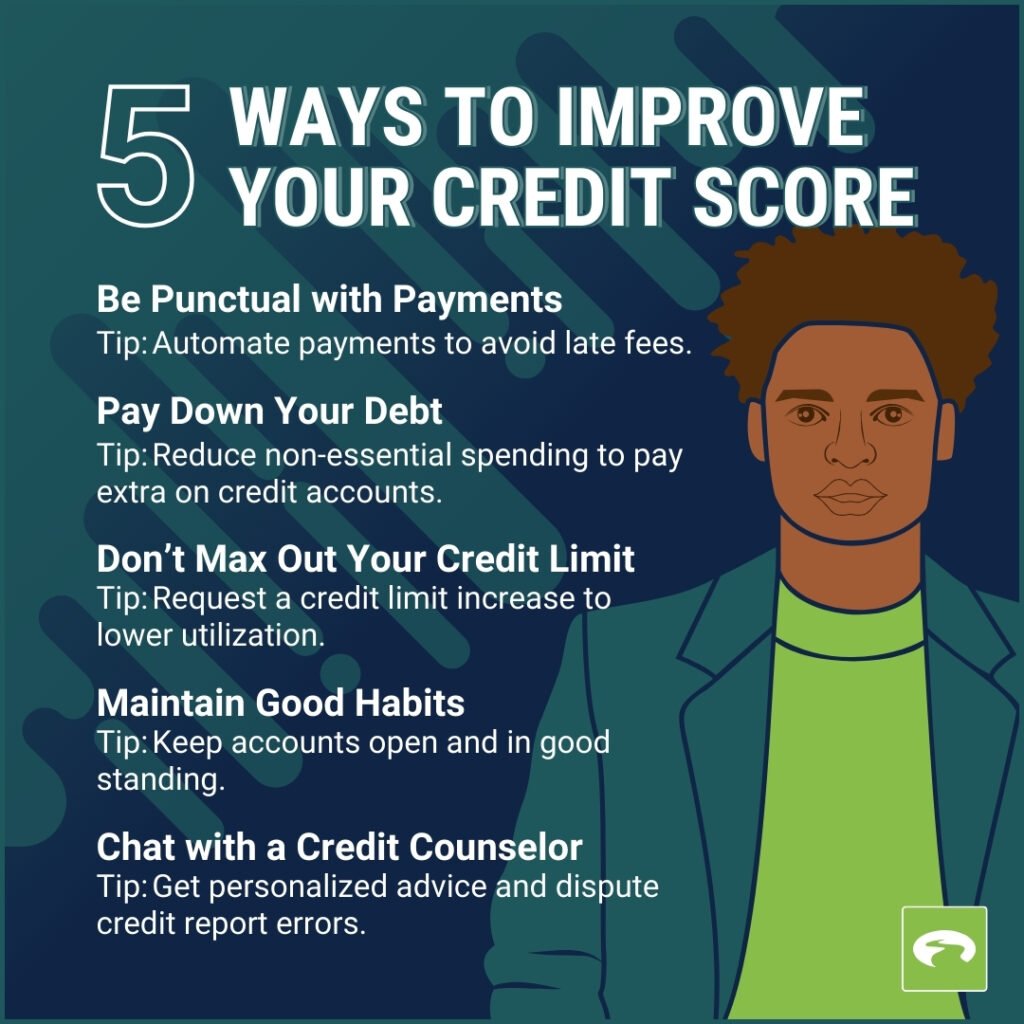
- Automate Your Financial Life: Set up autopay for the minimum payment at a minimum on every single credit account. This is your safety net against ever missing a payment due to forgetfulness. For optimal financial health, manually pay the full statement balance each month to avoid interest.
- Master Your Credit Utilization: This is the lever you can pull most quickly to boost your score.
- Pay Early/Before the Statement Closes: Credit card issuers typically report your balance to the bureaus once a month, on your statement closing date. If you plan a large purchase, pay down most of the balance before this date so a high balance is never reported.
- Request Credit Limit Increases: Periodically, ask your card issuer for a credit limit increase. If you get a $5,000 limit increase and your balance stays the same, your utilization ratio instantly drops. Only do this if the issuer can perform a “soft pull” (which doesn’t hurt your score), not a hard pull.
- Practice Strategic Credit Card Use:
- Don’t Close Old Accounts: The age of your oldest account and your average account age are crucial. Closing an old, unused card shortens your credit history and reduces your total available credit, which can increase your overall utilization. Keep it open, use it for a small charge once every six months to keep it active, and then pay it off.
- Apply for New Credit Sparingly: Space out your credit applications. Each hard inquiry can ding your score by a few points and stays on your report for two years.
- Monitor Your Score and Reports Regularly: You can’t manage what you don’t measure.
- Free Credit Reports: Use AnnualCreditReport.com to get your free reports from all three bureaus weekly. Check them for errors and signs of identity theft.
- Free Credit Scores: Many credit card issuers (e.g., Discover, Bank of America, Capital One), banks, and personal finance sites (like Credit Karma) now provide free access to your VantageScore or FICO Score.
Read more: Short-Term Trading vs. Long-Term Investing: Money Management Insights
Part 5: How to Fix and Rebuild Damaged Credit
If your credit has been damaged by late payments, collections, or more serious issues like bankruptcy, know that recovery is possible. It requires patience, discipline, and a methodical approach.
Step 1: Get Organized and Know Your Starting Point
Pull your three credit reports from AnnualCreditReport.com. Create a list of every negative item: late payments, collections, charge-offs, judgments, etc. Note the date of the first delinquency and the current status.
Step 2: Dispute Inaccuracies
By law, under the Fair Credit Reporting Act (FCRA), you have the right to dispute inaccurate or unverifiable information on your credit report.
- What to dispute: Accounts that aren’t yours, incorrect late payments, outdated information (negative items must be removed after 7-10 years, depending on the type), duplicate collections accounts.
- How to dispute: File a dispute directly with each credit bureau online, by mail, or by phone. The bureau then has 30 days to investigate and verify the information with the original lender. If it can’t be verified, it must be removed.
Step 3: Address Legitimate Negative Items
- For Late Payments:
- If they are recent, get current and stay current. The impact of a late payment fades over time.
- After you’ve re-established a pattern of on-time payments (6-12 months), you can write a “Goodwill Letter” to the lender. Politely explain the situation, take responsibility, and ask for a “goodwill adjustment” to remove the late payment from your report as a courtesy. This has a surprising success rate for one-off mistakes.
- For Collections Accounts:
- “Pay for Delete” Negotiation: This is the gold standard for handling collections. Before paying, contact the collection agency in writing and offer to pay the debt in exchange for them completely removing the collections account from your credit reports. Get this agreement in writing before you send a single penny. If they refuse, you have to decide if paying it (which will update the status to “Paid Collections”) is worth it for your peace of mind, though the negative mark will remain.
- Statute of Limitations: Be aware that old debt has a legal time limit for when you can be sued for it (varies by state, typically 3-6 years). Paying a very old debt can sometimes “re-age” it, so seek advice if the debt is near this limit.
- For Major Derogatories (Bankruptcy, Foreclosure, Repossession):
- There is no quick fix. The strategy here is time and rebuilding. These items have a severe impact, but it diminishes as they age. Focus on consistently practicing all the positive behaviors outlined in Part 4. As the negative item approaches its 7- or 10-year removal date, its effect will be minimal, and your positive new history will dominate your score.
Step 4: Re-establish Positive Credit
While you’re cleaning up the past, you must simultaneously build for the future. Go back to the strategies in Part 3. A secured card or credit-builder loan is often the best way to begin reintroducing positive payment data to your reports.
Part 6: Advanced Topics and Myths Debunked
Myth #1: Checking Your Own Credit Hurts Your Score.
FALSE. Checking your own credit report or score results in a “soft inquiry,” which has no impact on your score. You are encouraged to check it regularly.
Myth #2: You Need to Carry a Credit Card Balance to Build Credit.
FALSE and EXPENSIVE. This is one of the most persistent and costly myths. You do not need to pay interest to build a good score. The best practice is to pay your statement balance in full every month. The credit bureaus see that you use your credit, and you avoid all interest charges.
Myth #3: Closing a Credit Card Will Help My Score.
FALSE. As discussed, closing a card can hurt your score by increasing your utilization and lowering your average account age. Unless a card has a high annual fee that can’t be justified, it’s usually best to keep it open.
Myth #4: All “Credit Repair” Companies Are Scams.
MOSTLY TRUE. While some are legitimate, the industry is rife with fraud. Legitimate companies can help you dispute errors, but they cannot do anything you can’t do for yourself for free. Be extremely wary of any company that:
- Promises to remove accurate negative information.
- Asks for payment upfront before providing services (illegal under the Credit Repair Organizations Act – CROA).
- Tells you not to contact the credit bureaus directly.
- Suggests you create a new “credit identity” (this is illegal).
Conclusion: The Long Game of Financial Health
Your credit score is a marathon, not a sprint. It reflects a long-term pattern of financial behavior. There are no magic tricks, but there are proven, disciplined strategies.
The path to credit excellence is straightforward, if not always easy:
- Pay every bill, every time, on time.
- Keep your credit card balances low.
- Build a long and diverse credit history.
- Be strategic and sparing with new credit applications.
- Monitor your reports vigilantly for errors and fraud.
By understanding the system and taking consistent, responsible action, you can transform your credit score from a source of anxiety into a powerful asset that opens doors and saves you money for decades to come.
Frequently Asked Questions (FAQ)
Q1: What is a “good” credit score?
While ranges can vary slightly by lender, a general guide is:
- Exceptional: 800-850 (FICO)
- Very Good: 740-799
- Good: 670-739
- Fair: 580-669
- Poor: 300-579
Aim for a score of at least 670 to qualify for most conventional loans, and 740+ to secure the best available interest rates.
Q2: How long does negative information stay on my credit report?
- Late Payments: 7 years from the date of the first missed payment.
- Chapter 7 Bankruptcy: 10 years from the filing date.
- Chapter 13 Bankruptcy: 7 years from the filing date.
- Foreclosures: 7 years.
- Collections Accounts: 7 years from the date of the first missed payment that led to the collection.
- Hard Inquiries: 2 years.
Q3: Will getting married merge our credit scores?
No. Marriage does not merge your credit reports or scores. You and your spouse will always have separate credit files. However, any accounts you open jointly will appear on both reports and will affect both of your scores. Your spouse’s bad credit will not directly hurt your score unless you co-sign a loan for them.
Q4: I paid off a loan. Why did my score go down?
This can be frustrating but is often temporary. Paying off an installment loan (like a car loan) closes that account. This can sometimes cause a small, temporary dip in your score because it changes your credit mix and reduces the average age of your accounts. The positive effects of paying off debt will outweigh this dip in the long run.
Q5: What should I do if I am a victim of identity theft?
Act immediately.
- Place a fraud alert on your reports with one bureau (it will notify the other two).
- Consider placing a more severe credit freeze, which blocks most access to your reports.
- File an identity theft report with the FTC at IdentityTheft.gov.
- Dispute the fraudulent accounts with the credit bureaus in writing.
Q6: Is it better to have one credit card or several?
There’s no one-size-fits-all answer, but having a few cards (e.g., 2-4) can be beneficial for your score. It increases your total available credit, which lowers your overall utilization ratio. It also demonstrates you can manage multiple lines of credit responsibly. However, only take on what you can manage—one card managed perfectly is better than five cards managed poorly.
Q7: I have no debt. Why is my score low or non-existent?
Having no debt means you have no reported credit history. The scoring models have no data to evaluate you. This is known as having a “thin file.” To build a score, you need to use credit products that report to the bureaus, as outlined in the “Building Credit from Scratch” section.