For nearly eight decades, the US dollar has reigned supreme as the world’s primary reserve currency. It is the lifeblood of global trade, the anchor of international finance, and the ultimate safe-haven asset in times of crisis. This “exorbitant privilege,” as a French finance minister once called it, grants the United States unparalleled economic and geopolitical advantages, from the ability to run large deficits with relative impunity to wielding significant influence through its financial system.
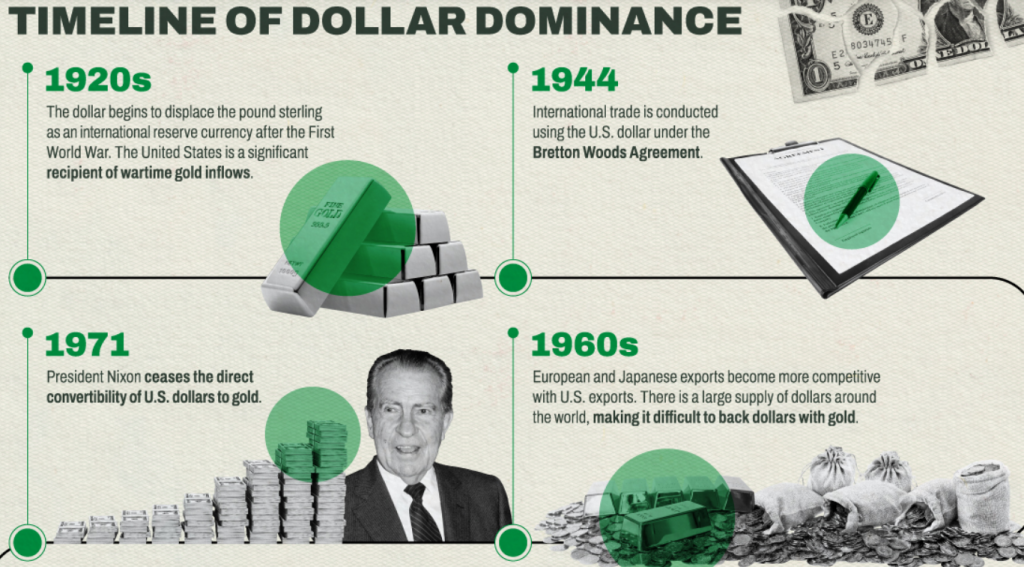
However, the post-World War II monetary order, cemented by the 1944 Bretton Woods agreement, is showing signs of strain. The rise of strategic competitors, mounting US debt, the weaponization of dollar-centric financial networks, and the advent of digital assets are collectively posing the most significant challenge to the dollar’s hegemony in a generation. This article delves into the intricate ecosystem of global reserve currencies, examines the pillars of the dollar’s dominance, analyzes the potent forces of fragmentation at work, and assesses the likelihood of a new monetary world order.
Part 1: What is a Reserve Currency and Why Does It Matter?
Before assessing the dollar’s future, one must understand the role and privileges of a reserve currency.
A reserve currency is a foreign currency held in significant quantities by central banks and other major financial institutions as part of their foreign exchange reserves. It is used to facilitate international transactions, influence domestic exchange rates, and instill confidence in the stability of the financial system.
The key functions of a dominant reserve currency are:
- Medium of Exchange: It is the primary vehicle for settling cross-border trade. A South Korean company buying oil from Saudi Arabia will likely transact in US dollars, not Korean won or Saudi riyals.
- Unit of Account: Global commodities, most notably oil and natural gas, are priced in dollars. This creates an inelastic demand for the currency, as importers must acquire dollars to purchase essential goods.
- Store of Value: It is considered a safe and liquid asset for sovereign wealth funds, central banks, and international investors. In times of geopolitical turmoil, capital floods into US Treasury bonds, seen as one of the safest assets in the world.
The benefits for the issuing country—the United States—are profound:
- Lower Transaction Costs: American businesses can trade and borrow internationally in their own currency, avoiding exchange rate risks.
- Seigniorage: The ability to print the world’s most desired money is a form of economic power. The global demand for dollars allows the US to import goods and finance its deficit by creating more of its own currency.
- Financial Power: The dollar’s centrality gives the US enormous leverage. It can impose sanctions, cut off access to dollar-clearing systems (like SWIFT, though it is Belgian-owned, dollar transactions are cleared through US-correspondent banks), and effectively ostracize nations from the global financial system—a power it has wielded with increasing frequency.
Part 2: The Unrivaled Pillars of Dollar Dominance
The dollar did not achieve its status by accident. It rests on a powerful, self-reinforcing foundation that has proven resilient for decades.
1. The Depth, Liquidity, and Safety of US Financial Markets
This is arguably the most critical pillar. The US Treasury market, with over $26 trillion in outstanding debt, is the largest, most liquid bond market globally. For a central bank managing hundreds of billions in reserves, this liquidity is non-negotiable. It means they can buy or sell vast quantities of US Treasuries without significantly moving the price. No other market offers this scale and ease of entry and exit.
Furthermore, the US offers a vast array of high-quality, dollar-denominated assets—from corporate bonds to agency debt—all underpinned by a robust legal and regulatory framework. The rule of law and strong property rights are essential for attracting foreign capital, and the US system, despite its imperfections, is viewed as one of the most predictable and secure.
2. The Size and Dynamism of the US Economy
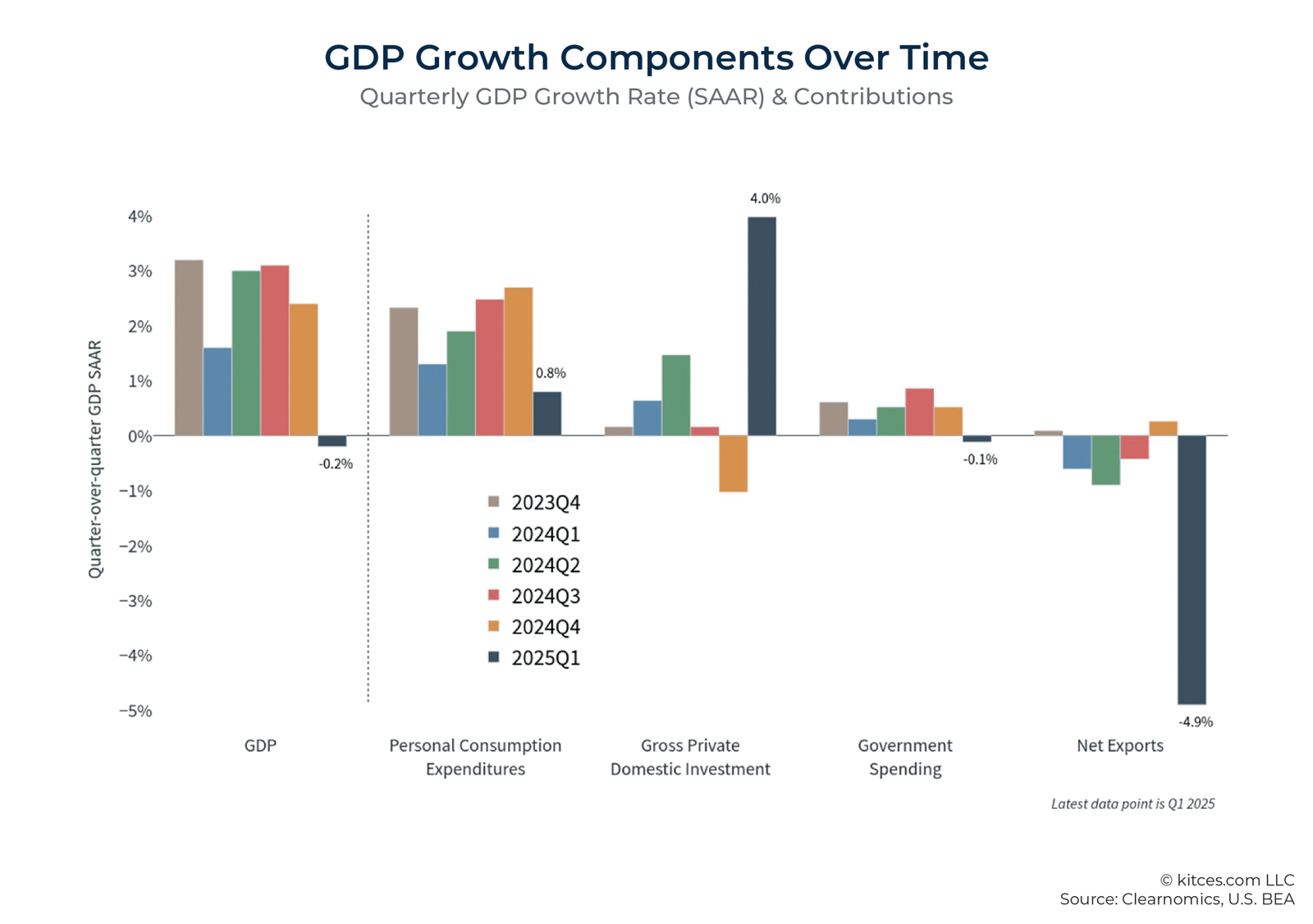
The United States remains the world’s largest economy by nominal GDP and a powerhouse of innovation and consumption. It is a massive, open market for the world’s goods and a primary source of corporate profits and technological advancement. The dynamism of its tech sector, the strength of its corporations, and the role of the consumer as the engine of global demand create a perpetual cycle where international entities need dollars to participate in this economic ecosystem.
3. Institutional and Political Stability
While political polarization is a real concern, the United States’ democratic institutions have demonstrated remarkable resilience over centuries. The peaceful transfer of power, an independent judiciary (including the Federal Reserve), and the defense of property rights provide a level of predictability that authoritarian regimes struggle to match. For a foreign government investing its national savings, this long-term stability is paramount. They are not just betting on an economy but on a political system.
4. The Network Effect and Inertia
The dollar benefits from a powerful network effect, similar to a social media platform or a language. Because everyone uses the dollar, it is more efficient for everyone to keep using the dollar. The entire infrastructure of global finance—invoicing systems, payment networks, banking correspondents, and financial software—is built around the US dollar. Switching costs are astronomically high. This creates immense inertia, making the status quo incredibly “sticky.”
Part 3: The Gathering Storm: Challenges to Dollar Hegemony
Despite its formidable strengths, the dollar-centric system is facing multipronged challenges that are eroding its dominance, not through a single catastrophic event, but through a gradual process of fragmentation.
1. The Rise of Strategic Competitors, Primarily China
China represents the most significant potential rival to the dollar’s status. Through its Belt and Road Initiative (BRI) and strategic economic policies, it is actively building an alternative ecosystem.
- Internationalization of the Renminbi (RMB): China has been promoting the use of the RMB in trade settlements, establishing currency swap lines with over 40 central banks, and developing its own cross-border interbank payment system, CIPS (Cross-Border Interbank Payment System), as an alternative to SWIFT for RMB transactions.
- Petroyuan Challenge: In a direct challenge to the petrodollar system, China has launched yuan-denominated oil futures contracts. While they are not yet a threat to replace Brent or WTI crude benchmarks, they offer oil producers an alternative to dollar-priced markets, especially those facing US sanctions, like Iran and Russia.
- Digital Yuan (e-CNY): China’s central bank digital currency (CBDC) is the most advanced among major economies. The e-CNY could potentially be used for cross-border payments, bypassing the dollar-dominated global banking system and offering a more efficient, traceable, and sanctions-resistant alternative.
However, China’s ambition is hamstrung by its own policies. Its lack of currency convertibility, opaque governance, weak rule of law, and capital controls severely limit the RMB’s appeal as a true reserve currency. Central banks are reluctant to hold large reserves in an asset they cannot freely move.
2. The Weaponization of the Dollar and Financial Sanctions
The extensive use of US financial sanctions against adversaries (e.g., Iran, Russia, Venezuela) has been a catalyst for de-dollarization. The freezing of approximately $300 billion of Russian central bank assets following the invasion of Ukraine was a stark warning to the world. While demonstrating the dollar’s power, it also accelerated the search for alternatives.
Countries from Brazil to India to Malaysia are now actively exploring bilateral trade in local currencies to insulate themselves from potential future sanctions. This “weaponization” has created a powerful incentive for geopolitical rivals and even neutral states to develop workarounds, reducing the dollar’s monopoly over international finance.
3. The Mounting US Debt Burden
The US national debt has surpassed $34 trillion and continues to grow. While the dollar’s status allows the US to finance this debt more easily, it is not a risk-free pass. Persistent large deficits and political brinksmanship over the debt ceiling can erode long-term confidence in US fiscal management.
If investors and central banks ever begin to doubt the US government’s willingness or ability to service its debt, it could trigger a self-reinforcing cycle: higher interest rates to attract buyers, increasing the debt burden further, and potentially leading to a loss of faith in the dollar as a store of value. This remains a long-term, structural risk rather than an immediate crisis, but it is a persistent cloud on the horizon.
4. The Advent of Digital Assets and Cryptocurrencies
The emergence of Bitcoin, Ethereum, and stablecoins presents a more radical challenge. While currently too volatile and limited in scale to function as reserve assets, they represent a new paradigm for storing and transferring value outside the traditional banking system.
- Decentralized Finance (DeFi): This ecosystem aims to recreate traditional financial instruments (lending, borrowing, derivatives) on a decentralized blockchain, theoretically without the need for intermediaries like banks or the oversight of a single government.
- Stablecoins: Most stablecoins are currently pegged to the dollar, which ironically reinforces its dominance. However, the technology itself is agnostic. A future where a stablecoin is pegged to a basket of currencies or a commodity is conceivable, offering a neutral medium of exchange.
Central banks are responding with their own digital currencies (CBDCs). The future of international payments may be a contest between different CBDC networks and private digital money, a battle that could reshape the architecture of global finance.
Part 4: The Contenders: A Reality Check on the Alternatives
Is there a viable alternative to the dollar? Let’s assess the potential contenders:
- The Euro (EUR): The euro is the world’s second-most important reserve currency, but it suffers from structural flaws. The Eurozone is not a full fiscal union; it lacks a unified eurobond market comparable to US Treasuries. Political fragmentation and the lingering memory of the sovereign debt crisis continue to hinder its challenge to the dollar.
- The Chinese Renminbi (RMB): As discussed, the RMB is the most likely candidate for gaining share, but it is decades away from challenging the dollar’s top spot due to China’s capital controls and political system. It will likely become a major regional currency, not a global one, in the medium term.
- The Japanese Yen (JPY) and British Pound (GBP): These are stable, liquid currencies, but they are issued by economies that are simply too small to supplant the US. They will remain important, but secondary, reserve assets.
- Special Drawing Rights (SDR): The IMF’s SDR is a basket of currencies (USD, EUR, CNY, JPY, GBP). While some have proposed expanding its role, it is an accounting unit, not a currency. It lacks a deep, private market for assets denominated in SDRs.
- Gold: Gold is seeing a resurgence in purchases by central banks, particularly those in the Global South seeking a neutral, non-sovereign asset. However, it is not a practical medium for daily transactions. It is a store of value, not a full-fledged currency.
The most probable scenario is not the replacement of the dollar by a single currency, but the emergence of a multipolar currency system. In this world, the dollar would remain the primary reserve currency, but its share would decline from the current ~60% to perhaps 40-50%, with the euro, renminbi, and possibly a digital asset gaining meaningful shares.
Read more: The Great Divergence: Can the US Economy Stay Decoupled as Europe and China Slow?
Part 5: The Path Forward: Adaptation, Not Abdication
The US is not a passive observer in this process. The dollar’s fate is inextricably linked to the country’s long-term economic and political choices.
To maintain its dominance, the United States must:
- Address its Fiscal Trajectory: Implementing a credible, long-term plan to curb the growth of the national debt is essential to maintaining global confidence.
- Invest in Innovation and Competitiveness: Continuing to lead in technology, energy, and manufacturing will ensure the US economy remains a dynamic and indispensable global hub.
- Uphold the Rules-Based International Order: While using financial tools for national security, overuse or perceived capricious use of sanctions can be counterproductive. A measured, multilateral approach is more sustainable.
- Embrace the Digital Future: The US must be a leader in setting the standards for the next generation of financial infrastructure, including CBDCs and the regulation of digital assets. Ceding this ground to competitors would be a historic strategic error.
Conclusion: An Evolving, Not Ending, Reign
The US dollar’s position as the world’s premier reserve currency is secure for the foreseeable future. The pillars of its strength—deep financial markets, economic dynamism, and institutional stability—remain robust. The network effects and inertia of the current system are powerful forces that cannot be overturned quickly.
However, the era of unquestioned dollar supremacy is over. The world is gradually moving toward a more fragmented, multipolar monetary system, driven by geopolitical rivalry, technological disruption, and a desire for strategic autonomy. The dollar will not “collapse,” but its dominance will be diluted.
The challenge for the United States is to navigate this transition wisely, reinforcing the fundamental strengths of its economy and its institutions while adapting to a world where its financial power is no longer absolute. The greenback’s reign will continue, but it will have to learn to share the stage.
Frequently Asked Questions (FAQ)
1. What does it mean for the US if the dollar loses its reserve status?
It would be a significant economic and geopolitical shift. The US would face higher borrowing costs, a weaker currency leading to imported inflation, and a reduced ability to use financial sanctions as a tool of foreign policy. The American standard of living would likely be negatively impacted.
2. How long would it take for another currency to replace the dollar?
History suggests these transitions are slow, measured in decades, not years. The British pound retained significant reserve status for 30-50 years after the US surpassed the UK as the world’s largest economy. A full replacement of the dollar is unlikely in the next 20-30 years, but a gradual decline in its share is already underway.
3. Are countries really “dumping” US Treasuries?
The data is nuanced. Some nations, like China, have reduced their holdings as a percentage of total reserves or for geopolitical reasons, but there is no mass, coordinated sell-off. Often, reductions are due to central banks intervening to support their own currencies. The US Treasury market remains the deepest and most liquid in the world, and private global demand often fills any gaps left by official sales.
4. Could a digital currency like Bitcoin replace the dollar?
In its current form, no. Bitcoin’s extreme volatility, scalability limitations, and lack of a sovereign backing make it unsuitable as a primary reserve currency or medium of exchange for global trade. However, the underlying blockchain technology could inspire new financial architectures that challenge the current dollar-centric system.
5. What is the most immediate threat to the dollar?
The most immediate threat is not a new currency, but the fragmentation of the global financial system into blocs. The weaponization of the dollar is accelerating the creation of parallel payment systems and bilateral trade agreements that bypass the dollar, eroding its network effects over time.
6. What should an average investor watch as an indicator of the dollar’s declining status?
Key indicators to monitor include:
- A sustained and significant decline in the dollar’s share of global foreign exchange reserves (currently ~59%).
- A major commodity (like Saudi oil) beginning to be routinely priced and traded in a currency other than the dollar.
- The successful widespread international adoption of a non-dollar payment system for trade, such as a digital yuan network.