
A modern-day gold rush is sweeping across the United States, but the precious commodity isn’t found in riverbeds—it’s forged in silicon and algorithms. Artificial Intelligence (AI), once a speculative domain of academic research and science fiction, has erupted into a transformative force reshaping the global economic and technological landscape. At the heart of this seismic shift lies a powerful synergy between two critical sectors: the relentless innovation of the U.S. technology industry and the foundational might of its semiconductor (chipmaking) industry.
This isn’t just a story of software breakthroughs; it’s a complex narrative of hardware, policy, capital, and talent converging to define the next chapter of American industrial strategy. The U.S., through a combination of private sector dynamism and strategic public policy, is positioning itself to not just participate in the AI revolution, but to lead it. This article provides a deep dive into the “AI Gold Rush,” analyzing the key players, the driving forces, the geopolitical undercurrents, and the future trajectory of this defining technological boom.
Section 1: The Bedrock – Why Semiconductors are the New Oil
To understand the AI boom, one must first appreciate the central role of the semiconductor. These tiny, complex pieces of silicon are the brains of every modern electronic device. For AI, and specifically for the complex machine learning models known as “foundation models,” a specific type of chip is paramount: the Graphics Processing Unit (GPU).
1.1 The GPU: From Pixels to Predictions
Originally designed to render video game graphics by performing many calculations simultaneously, GPUs possess a parallel architecture that is perfectly suited for the massive, distributed computational workloads required for training AI models. While Central Processing Units (CPUs) are the generalists of the computing world, GPUs are the specialists for AI’s heavy lifting.
NVIDIA’s Dominance: In this arena, one U.S. company stands virtually unopposed: NVIDIA. Founded in 1993, NVIDIA strategically pivoted its GPU technology toward high-performance computing and AI over a decade ago. Its creation of the CUDA software platform provided developers with the tools to harness GPU power for scientific and AI applications, creating a powerful software moat around its hardware. Today, NVIDIA commands an estimated 80-95% of the market for AI chips, a dominance that has propelled it to become one of the most valuable companies in the world. Its data center GPUs, like the H100 and the new Blackwell platform, are the undisputed engines of the AI revolution, powering the servers of every major cloud and AI company.
1.2 Beyond NVIDIA: The Competitive Landscape
While NVIDIA is the titan, the market is dynamic and fiercely competitive.
- AMD (Advanced Micro Devices): Under the leadership of Dr. Lisa Su, AMD has emerged as a formidable challenger with its MI300 series of AI accelerators. Gaining significant traction with major cloud providers, AMD is leveraging its strong CPU and GPU heritage to offer compelling alternatives.
- Custom Silicon (ASICs): The largest tech giants are not content to rely solely on merchant suppliers. Google has developed its Tensor Processing Units (TPUs), Amazon its Inferentia and Trainium chips, and Microsoft is reportedly developing its own AI silicon. These Application-Specific Integrated Circuits (ASICs) are tailored to their specific AI workloads, offering potential performance and cost efficiencies.
- Intel: The legacy CPU leader has been playing catch-up. With its Gaudi accelerators and a renewed focus on foundry services, Intel is aiming to reclaim its relevance in the AI era, though it faces a steep uphill battle.
1.3 The CHIPS and Science Act: A National Mobilization
Recognizing that semiconductor manufacturing had heavily shifted to Asia (particularly Taiwan and South Korea), creating a critical strategic vulnerability, the U.S. government took unprecedented action. In August 2022, President Biden signed the CHIPS and Science Act into law.
This landmark legislation provides over $52 billion in funding to bolster U.S. semiconductor research, development, and manufacturing. Its goals are twofold:
- Economic Competitiveness: To bring cutting-edge chip fabrication back to American soil.
- National Security: To ensure a stable, domestic supply of the advanced chips that power everything from AI models to advanced weapons systems.
The Act has already spurred massive announced investments:
- TSMC (Taiwan): Building two fabs in Arizona, with plans for a third for advanced 2nm chips.
- Intel: Expanding its fabs in Arizona, Ohio, and New Mexico.
- Samsung (South Korea): Investing heavily in a new fab in Texas.
- Micron: Planning a massive “mega-fab” complex in New York for memory chip production.
This state-driven capital injection is creating a virtuous cycle, attracting talent, supply chain companies, and further private investment, solidifying the U.S. position in the most advanced stages of chip production.
Section 2: The Prospectors – The U.S. Tech Ecosystem’s AI Frenzy
The availability of powerful chips has unlocked an explosion of innovation across the U.S. tech sector. The “prospectors” in this gold rush are the companies building the tools, platforms, and applications atop this hardware foundation.
2.1 The Cloud Hyperscalers: Selling Shovels and Pickaxes
In the original Gold Rush, the ones who made the most reliable fortunes were those selling the tools. In the AI Gold Rush, that role is played by the cloud computing giants: Microsoft (Azure), Amazon (AWS), and Google (Google Cloud).
These companies are engaged in a high-stakes war to become the primary platform for AI development and deployment. Their strategy is multi-pronged:
- Providing Access to AI Chips: They offer vast clusters of NVIDIA and other AI chips as a service, allowing startups and enterprises to train and run models without a massive upfront capital investment.
- Developing Foundational Models: All three have their own flagship models—Microsoft with Copilot (powered by OpenAI), Google with Gemini, and Amazon with Titan.
- Creating Ecosystem Moats: They are embedding AI deeply into their core services (e.g., Office 365, Google Workspace, AWS compute services) to lock in customers and create sticky, recurring revenue streams.
Microsoft’s multi-billion-dollar partnership with OpenAI, the creator of ChatGPT, has been a masterstroke, giving it a perceived first-mover advantage that has supercharged its cloud and enterprise business.
2.2 The Software Layer: Applications and Infrastructure
Beneath the hyperscalers lies a thriving ecosystem of specialized software companies.
- AI Pure-Plays: Companies like OpenAI, Anthropic, and Cohere are focused on pushing the boundaries of foundation model capabilities, often partnering closely with cloud providers.
- Infrastructure and MLOps: Firms like Databricks and Snowflake are providing the data platforms that feed AI models. Specialized MLOps (Machine Learning Operations) companies are creating the tools to manage the lifecycle of AI models in production.
- Vertical AI: The most significant value creation may come from companies applying AI to specific industries—”Vertical AI.” This includes everything from AI-driven drug discovery (Recursion Pharmaceuticals, Relay Therapeutics) to legal tech, financial analysis, and autonomous systems.
2.3 The Capital Surge: Venture Capital and Corporate Investment
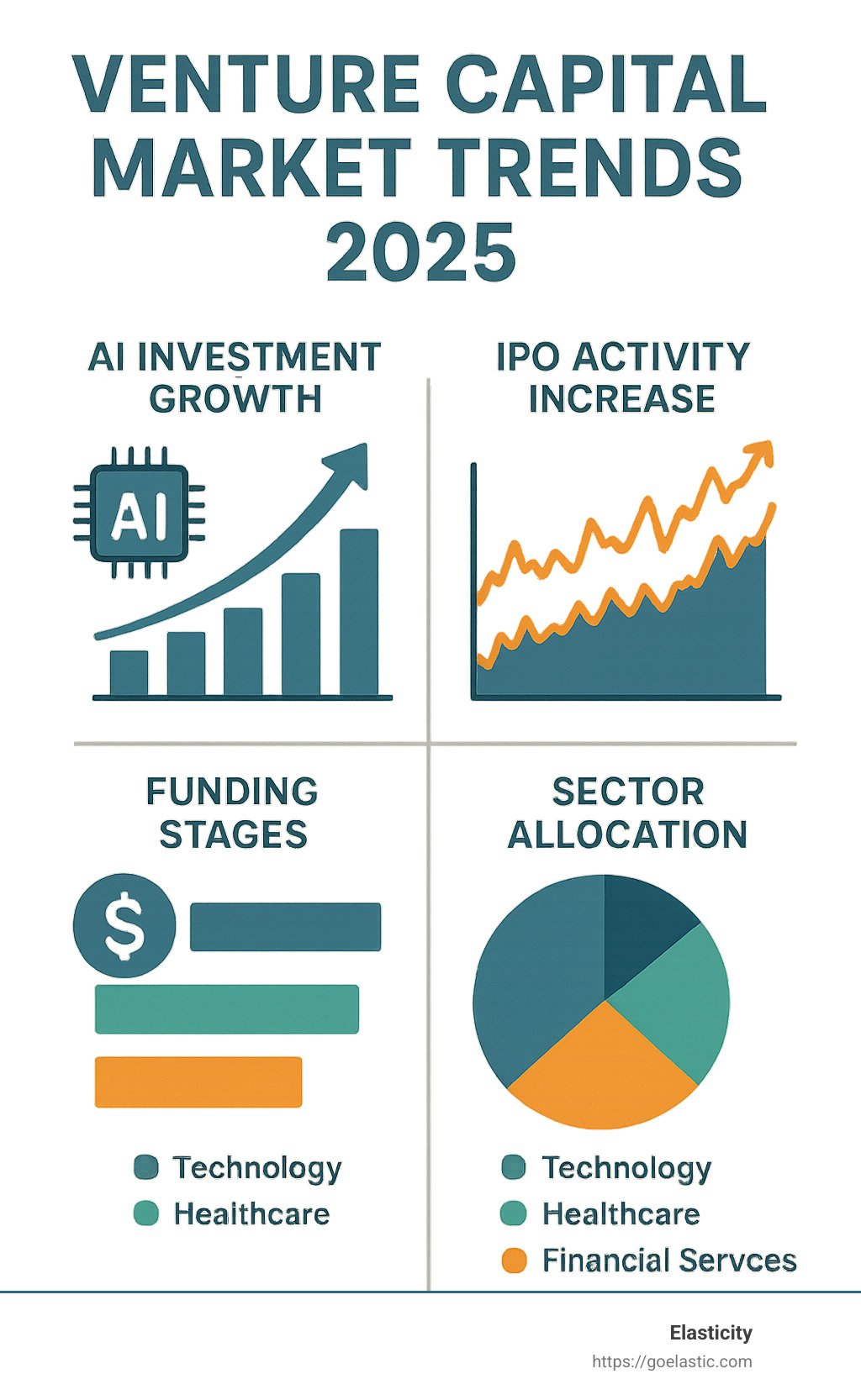
The scale of investment is staggering. In 2023, U.S. venture capital funding for AI-related companies reached $67.2 billion, according to PitchBook. Beyond traditional VC, corporate venture arms (from NVIDIA, Google, etc.) are making massive strategic bets. NVIDIA itself has become a prolific investor, with a portfolio of over two dozen AI startups, strategically deploying capital to fuel an ecosystem that will, in turn, demand more of its chips.
Read more: The 1-Hour Power Hour: A Day Trader’s Strategy for Capturing the Midday Moves
Section 3: The Fault Lines – Challenges and Geopolitical Tensions
No gold rush is without its perils. The AI boom is creating significant challenges that threaten its sustainability and pose profound ethical and strategic questions.
3.1 The Talent Crunch
The demand for AI talent—especially for researchers, machine learning engineers, and chip architects—far outstrips supply. Salaries for top-tier AI PhDs can reach into the millions of dollars, creating a fierce war for talent that risks leaving smaller players and public institutions behind. This also highlights the critical importance of the U.S. immigration system for high-skilled workers and the need for a renewed focus on STEM education domestically.
3.2 The Power Thirst
AI is incredibly energy-intensive. Training a single large language model can consume more electricity than 100 homes use in a year. Data centers, the physical homes of the AI cloud, are seeing their power demands skyrocket. This poses a major challenge for U.S. energy grids and sustainability goals. The industry is responding with innovations in liquid cooling, more energy-efficient chip designs, and a push to power data centers with renewable energy, but the power dilemma remains a fundamental constraint on unfettered growth.
3.3 The Geopolitical Arena: The U.S. and China
The AI race is a central front in the broader technological competition between the United States and China. The U.S. has implemented increasingly stringent export controls, designed to deny China access to the most advanced AI chips and the equipment to manufacture them. While intended to protect a national security advantage, these controls have several effects:
- They force China to accelerate its own indigenous chip development efforts (through companies like SMIC).
- They create uncertainty for U.S. chip companies, for whom the Chinese market has been a major source of revenue.
- They risk bifurcating the global tech ecosystem into separate U.S.-led and China-led spheres.
This great power competition ensures that the AI Gold Rush is not just an economic event, but a geopolitical one, with the U.S. government and its allies actively shaping the market through policy.
3.4 Ethical and Regulatory Headwinds
The breakneck speed of AI development has outpaced the creation of guardrails. Concerns are mounting over:
- Bias and Fairness: AI models can perpetuate and amplify societal biases present in their training data.
- Disinformation: The ability to generate convincing synthetic media (“deepfakes”) poses a threat to information integrity.
- Job Displacement: The potential for AI to automate cognitive tasks creates anxiety about the future of white-collar work.
- Privacy: The data-hungry nature of AI models raises significant privacy concerns.
The U.S. is currently grappling with how to regulate AI. The Biden Administration’s Executive Order on AI and ongoing legislative efforts in Congress aim to establish a framework for “responsible AI,” but finding the balance between innovation and protection remains a monumental challenge.
Section 4: The Future Claim – What’s Next for the U.S. AI Boom?
The AI Gold Rush is still in its early innings. Several key trends will define its next phase.
- The Shift to Edge AI: Not all AI will run in the cloud. We will see a proliferation of specialized, lower-power AI chips in devices like smartphones, cars, cameras, and IoT sensors, enabling faster, more private, and more reliable AI at the “edge.”
- The Rise of AI-Native Companies: The next Google or Meta will be a company built from the ground up with AI at its core, not just as an add-on feature.
- The Productivity Promise: The true economic payoff will come from the broad adoption of AI tools across all industries to enhance productivity. This could lead to a new era of economic growth, though the transition may be disruptive.
- The Next Architectural Leap: While GPUs dominate today, research into new computing paradigms—like neuromorphic computing and quantum computing—continues. A breakthrough here could redefine the hardware landscape once again.
Conclusion: More Than a Boom, a Lasting Transformation
The AI Gold Rush, powered by the symbiotic rise of U.S. technology and chipmaking, is more than a transient market frenzy. It represents a fundamental technological shift on par with the advent of the personal computer or the internet. The United States, through a potent combination of decades of foundational research, a vibrant venture capital ecosystem, world-leading companies, and strategic government intervention, has secured a powerful pole position.
The challenges are real—from talent shortages and energy demands to ethical quandaries and geopolitical friction. Navigating these will require sustained collaboration between industry, government, and academia. Yet, the direction is clear. The race to define the future of intelligence is underway, and the United States is determined to be its primary architect. The stakes are nothing less than economic leadership, national security, and the shape of society in the 21st century.
Read more: Swing Trading US Sector Rotation: How to Spot the Next Leading Industry
Frequently Asked Questions (FAQ)
Q1: I keep hearing about NVIDIA’s dominance. Is there any real competition on the horizon?
A: Yes, competition is intensifying. While NVIDIA holds a commanding lead due to its full-stack approach (hardware + software + ecosystem), credible challenges are emerging. AMD’s MI300 series is gaining market share, and the custom silicon efforts from Google, Amazon, and Microsoft are creating a captive market. Furthermore, a wave of well-funded startups like Cerebras and SambaNova is innovating with alternative chip architectures. The market is unlikely to remain a near-monopoly in the long term.
Q2: How does the CHIPS Act help the U.S. compete with Taiwan and South Korea in chipmaking?
A: The CHIPS Act isn’t about instantly surpassing TSMC (Taiwan) or Samsung (South Korea) in all aspects. Their technological lead and ecosystem density are profound. The Act’s goal is to onshore the most advanced and strategically critical manufacturing. It reduces the risk of a single point of failure (like a geopolitical conflict involving Taiwan) disrupting the global supply chain. It’s about resilience and securing a domestic base for leading-edge logic chips, not necessarily replicating the entire global supply chain.
Q3: What is “Vertical AI” and why is it important?
A: “Vertical AI” refers to artificial intelligence solutions that are deeply specialized for a single industry or business function. Instead of a general-purpose chatbot, think of an AI model trained exclusively on molecular data to discover new drugs, or one trained on legal case law to assist lawyers. It’s important because this is where much of the tangible, near-term economic value of AI will be realized. These specialized applications often face fewer “hallucination” problems and can deliver a clearer return on investment by solving specific, high-value business problems.
Q4: Are the massive data centers for AI a major environmental concern?
A: Yes, this is a significant and growing concern. The energy and water consumption of large AI data centers is substantial and is putting a strain on local grids and resources, especially during periods of high demand. The industry is acutely aware of this and is responding in three key ways: 1) Designing more power-efficient chips and server architectures, 2) Investing heavily in powering data centers with renewable energy through Power Purchase Agreements (PPAs), and 3) Exploring advanced cooling technologies. However, balancing the explosive growth of AI with sustainability goals remains one of the sector’s biggest challenges.
Q5: As a professional outside of the tech industry, how should I be thinking about AI?
A: Think of AI as a general-purpose technology, like electricity or the internet. It’s not just another app; it’s a foundational capability that will eventually transform every sector. You don’t need to become a machine learning expert, but you should:
- Become an informed user: Experiment with AI tools relevant to your field (e.g., writing assistants, data analysis plugins, design tools).
- Focus on augmentation, not replacement: Consider how AI can augment your skills and productivity, automating routine tasks and freeing you up for higher-level strategy, creativity, and human interaction.
- Develop critical thinking: Cultivate a healthy skepticism. Learn to identify potential biases in AI outputs and understand the limitations of the technology. The professionals who thrive will be those who can effectively partner with AI tools.