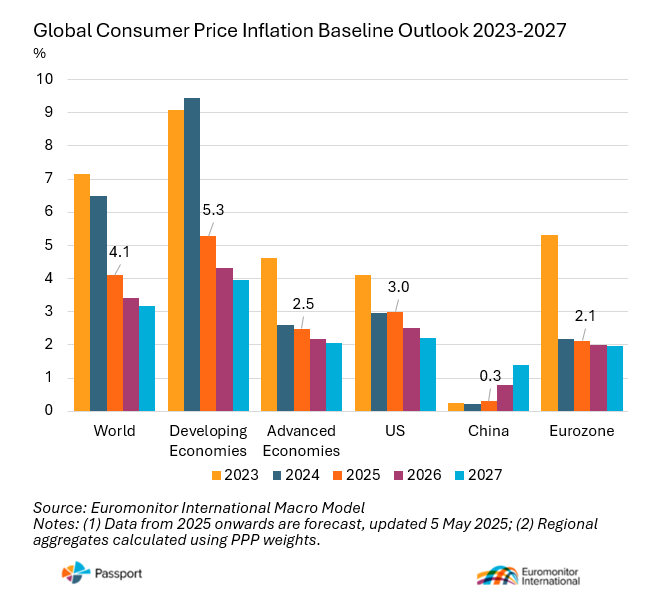
For decades, the American consumer has been the engine of the global economy, a seemingly self-contained powerhouse driving growth at home and abroad. This perception often fostered a domestic lens through which we viewed economic phenomena, particularly inflation. If prices rose, the culprits were typically found within our own borders: stimulative fiscal policy, wage-pressure from a tight labor market, or the pricing power of large domestic corporations.
The post-pandemic world has shattered this illusion. The interconnectedness of the 21st-century global economy means that no major nation is an island, economically speaking. The United States, for all its economic might, is deeply embedded in a complex web of international trade, finance, and supply chains. Consequently, price pressures brewing in the industrial heartlands of Europe or the manufacturing hubs of Asia no longer remain a distant concern. They travel across oceans, transmitted through a variety of channels to directly impact the wallet of the American consumer and the strategic calculations of the Federal Reserve.
This article delves into the intricate mechanisms of this global inflation ripple effect. We will move beyond the headlines to explore how specific economic shocks in Europe and Asia—from an energy crisis triggered by war to supply chain reconfiguration in China—create tangible consequences for US price levels, consumer sentiment, and the broader market outlook. Understanding these dynamics is no longer an academic exercise; it is essential for investors, policymakers, and any individual seeking to navigate the uncertain economic landscape of the 2020s.
Part 1: The European Crucible – Energy, The Euro, and The ECB
Europe’s battle with inflation, particularly in the wake of Russia’s invasion of Ukraine, provides a stark and powerful case study of global economic transmission. The continent’s historical reliance on Russian natural gas created a profound vulnerability, which was brutally exposed in 2022. The resulting shockwaves did not stop at European borders.
1.1 The Energy Channel: From Gas Pipelines to US Gasoline Pumps
The most direct link between European inflation and the American consumer is the global energy market. When the war in Ukraine led to a drastic reduction in Russian gas flows to Europe, the continent was forced to compete fiercely for liquefied natural gas (LNG) cargoes on the global market.
- The LNG Squeeze: Europe’s dash for LNG, primarily from the United States and Qatar, bid up the price of this crucial commodity worldwide. The United States, now the world’s top LNG exporter, found its domestic natural gas prices becoming increasingly correlated with global benchmarks. While the US enjoys a significant price discount due to its vast domestic production, the export link means that soaring prices in Europe and Asia inevitably pull US prices higher. This translates directly into higher heating and electricity costs for American households and businesses.
- The Global Oil Nexus: Furthermore, natural gas is often a feedstock and power source for industry. Soaring European gas prices forced some fertilizer and chemical plants to curtail production or shut down entirely. This reduction in supply had a knock-on effect on global agricultural prices and certain chemical products, adding another layer of inflationary pressure. While oil is a more globally unified market, the energy crisis in Europe contributed to overall global uncertainty and price volatility, which feeds into the price of gasoline—the most visible inflation indicator for most Americans.
1.2 The Currency Channel: The Dollar’s Double-Edged Sword
The European Central Bank (ECB), like the Federal Reserve, has been engaged in an aggressive battle against inflation. However, the ECB faces a more difficult task: navigating the inflationary impact of a weak currency while avoiding tipping a politically fragmented bloc into a deep recession.
- A Weaker Euro, A Stronger Dollar: When the outlook for the European economy darkens due to an energy crisis or political uncertainty, investors often flee the euro and seek the safe-haven status of the US dollar. Similarly, if the Fed is perceived as more hawkish than the ECB, it attracts capital flows into dollar-denominated assets. A strong dollar sounds like a victory for American prestige, but it has complex consequences.
- Imports Cheaper, Exports Pricier: A strong dollar makes imports cheaper for US consumers, which can be a deflationary force on goods from Europe and other regions. However, it makes US exports more expensive for foreign buyers. This can hurt the profits of American multinational corporations, from agriculture to manufacturing, potentially leading to reduced investment and hiring in those sectors. For financial markets, a strong dollar can be a headwind for large-cap US equity indices like the S&P 500, which derive a significant portion of their revenue from overseas. When those foreign earnings are converted back into a strong dollar, they are worth less.
1.3 The Demand Channel: When European Consumers Sneeze…
Sustained high inflation and the ECB’s subsequent interest rate hikes are designed to cool the European economy by suppressing demand. As European consumers feel the pinch from higher mortgage rates and elevated food and energy costs, they rein in their spending.
- Reduced Demand for US Goods and Services: This pullback in European consumption means lower demand for American products, from California’s wines and Kentucky’s bourbon to Apple’s iPhones and Hollywood’s films. A recession in Europe, one of the world’s largest economic blocs, acts as a drag on global growth, which can negatively impact the earnings and outlook of US companies with significant European exposure. This, in turn, affects US stock market performance and corporate profitability.
Part 2: The Asian Anchor – Supply Chains, The Yuan, and Strategic Competition
If Europe represents the crisis-driven, energy-intensive side of the inflation story, Asia represents the structural, production-centric side. As the “workshop of the world,” price pressures and policy decisions in Asia, particularly China, have an outsized impact on global goods inflation.
2.1 The Supply Chain Channel: Beyond the “Transitory” Narrative
The pandemic-era supply chain chaos was a brutal lesson in global interdependence. While many of the acute bottlenecks have eased, the underlying structure and vulnerabilities remain highly relevant to the inflation outlook.
- China’s Zero-Covid Hangover: China’s stringent zero-Covid policy caused repeated, massive disruptions to its manufacturing and port operations. The lockdown in Shanghai in 2022, a pivotal global port, sent shockwaves through supply chains for everything from automobiles to consumer electronics. While the policy has been abandoned, the legacy of these disruptions, combined with ongoing geopolitical tensions, has forced a fundamental rethink of “just-in-time” global sourcing.
- The “China Plus One” Inflation: To mitigate risk, multinational companies are actively pursuing a “China Plus One” strategy, diversifying their manufacturing bases to other countries like Vietnam, India, and Mexico. While beneficial for resilience and geopolitics, this diversification is inherently inflationary in the short to medium term. Building new factories, training new workforces, and establishing new logistics routes is costly. These costs are inevitably passed down the supply chain, contributing to the stickiness of goods inflation, even as demand normalizes. It represents a structural shift from the hyper-efficient, deflationary model of the past three decades.
2.2 The Currency and Export Channel: Exporting Deflation (or Inflation)
China’s role as the world’s primary manufacturer has long been a deflationary force for the West. However, this dynamic is changing.
- The Weakening Yuan: In response to its own domestic economic slowdown, particularly in the property sector, China’s central bank has allowed the yuan to weaken against the dollar. A weaker yuan makes Chinese exports cheaper and more competitive on the global market. For the US consumer, this can help dampen goods inflation, as the price of imported goods from China may not rise as quickly. However, it also exacerbates the US trade deficit and can draw political ire.
- Shifting Export Priorities: Conversely, if China experiences significant domestic inflation—driven by, for instance, a surge in global commodity prices—it could choose to prioritize its home market, reducing exports and driving up prices for the goods it does sell abroad. This would directly export inflation to the US and other Western nations.
2.3 The Commodity Channel: Feeding the Dragon’s Appetite
Asia’s immense population and industrial base make it a voracious consumer of global commodities. China and India are critical players in the markets for industrial metals (copper, iron ore), agricultural products (soybeans, corn), and energy.
- Competing for Resources: A strong economic recovery in Asia, particularly in China, would lead to increased demand for these commodities, bidding up their prices on global markets. As the US is also a major importer of many of these raw materials and the finished goods derived from them, this creates upward pressure on a wide range of domestic prices, from the cost of construction to the price of food.
Part 3: The Confluence – How Global Pressures Shape the US Federal Reserve’s Dilemma
The global ripples from Europe and Asia do not simply lap gently on American shores; they converge to create a powerful tide that the US Federal Reserve must navigate. This creates a profoundly complex and often conflicting set of signals.
3.1 Conflicting Signals for the Fed
The Fed’s dual mandate is to achieve maximum employment and stable prices (2% inflation). Global events directly challenge this mission.
- Imported Inflation vs. Imported Disinflation: The energy shock from Europe and supply chain pressures from Asia are unequivocally inflationary. They fall squarely into the “stable prices” side of the mandate, compelling the Fed to maintain a hawkish, tight monetary policy with higher interest rates. However, a strong dollar (driven by European weakness and safe-haven flows) and a potential recession in Europe are disinflationary or even deflationary. They weaken US export demand and cool the economy, suggesting the Fed may need to pivot to a more dovish stance sooner.
- The Lag Effect’s Global Complication: Monetary policy operates with long and variable lags. The Fed must therefore be forward-looking. If it sees European energy prices stabilizing and Asian supply chains normalizing, it might anticipate a future decline in imported inflation. However, if it misjudges the persistence of these global forces, it risks either overtightening policy and triggering an unnecessary recession or undertightening and allowing inflation to become entrenched.
3.2 The “Higher for Longer” Scenario
The new global reality makes a return to the ultra-low inflation and interest rate environment of the 2010s unlikely. The structural shifts—from deglobalization and supply chain diversification to the green energy transition (which is massively commodity-intensive)—suggest that the baseline for inflation may be structurally higher. This supports the argument that interest rates may need to remain “higher for longer” than markets currently expect, even after the current inflationary spike subsides. The Fed is not just fighting domestic demand; it is fighting a new, less cooperative global economic order.
Read more: Backtesting Your Swing Trading Strategy: How to Validate Ideas Before Risking Real Money
Part 4: Navigating the New Normal – Implications for the US Consumer and Investor
For the American consumer and investor, this globalized inflation environment demands a new playbook. The old assumptions are no longer reliable.
4.1 The US Consumer: A More Resilient, Yet Pressured, Participant
The American consumer has shown remarkable resilience, bolstered by a strong labor market. However, the global ripple effect ensures that this resilience is constantly tested.
- The Budget Squeeze: The most direct impact is on household budgets. The European energy crisis means higher utility bills and prices at the gas pump. Supply chain issues and “China Plus One” restructuring contribute to the stickiness of goods prices, from cars to appliances. The consumer’s dollar simply does not go as far as it once did, forcing trade-offs and reducing discretionary spending.
- Shifting Consumption Patterns: In response, consumers are becoming more value-conscious. They may trade down from national brands to private-label goods, delay major purchases, and seek out discounts more aggressively. This behavior, while rational for the individual, can, in aggregate, signal a slowing economy to businesses and investors.
4.2 The Investor’s New Calculus
For investors, a world of globalized inflation and divergent central bank policies requires a more nuanced, internationally-aware approach.
- Sectoral Winners and Losers:
- Energy and Commodities: Companies in these sectors may benefit from sustained higher global prices, though they are also subject to high volatility.
- Domestic-Focused Companies: Firms that generate the vast majority of their revenue within the US are somewhat insulated from a strong dollar and European recessionary pressures.
- Multinationals and Exporters: Companies with significant sales in Europe or those that rely on exports face headwinds from a strong dollar and weak foreign demand.
- Supply Chain Resiliency Plays: Companies involved in near-shoring, automation, and logistics technology may see long-term tailwinds from the ongoing supply chain reconfiguration.
- Fixed Income and Currency Considerations: The “higher for longer” interest rate environment makes traditional bonds more attractive than they have been in years, but also increases the risk of recession. Currency movements, driven by transatlantic policy divergence, become a critical factor in international portfolio returns. Hedging strategies may regain prominence.
Conclusion: Embracing Interdependence in an Age of Uncertainty
The era of viewing inflation through a purely domestic lens is over. The American economy, consumer, and investor are now irrevocably subject to the ripple effects of events thousands of miles away—a trade dispute in the Taiwan Strait, a pipeline shutdown in the Baltic Sea, or a fiscal decision in Frankfurt.
Understanding these channels—energy, currency, supply chain, and demand—is the first step toward building resilience. For policymakers, it demands greater international coordination and communication. For businesses, it necessitates more robust and diversified supply chains. For consumers and investors, it requires a broader perspective, one that looks beyond domestic headlines to the global economic weather patterns that ultimately determine our financial climate.
The challenge is immense, but so is the opportunity. By acknowledging and adapting to this new reality of economic interdependence, the US can better navigate the turbulent waters ahead, turning global headwinds into manageable currents and securing a more stable, if different, economic future.
Read more: Level 2 Data and Time & Sales: Reading the Tape Like a Wall Street Pro
Frequently Asked Questions (FAQ)
Q1: I keep hearing that the US is “energy independent.” So why do European energy prices affect me?
This is a common point of confusion. The US is a net exporter of energy, meaning we produce more than we consume. However, we are part of a global energy market. The key is Liquefied Natural Gas (LNG). The US is the world’s top LNG exporter. When Europe faces a shortage, it bids up the price of LNG on the global market. US energy companies will naturally sell their product to the highest bidder, which pulls domestic US prices higher. So, while we may not rely on foreign oil as we once did, our natural gas prices are now linked to global dynamics.
Q2: A strong US dollar sounds like a good thing. Why is it considered a problem?
A strong dollar is a double-edged sword. It does make imported goods cheaper for US consumers, which can help fight inflation. However, it makes US exports more expensive for foreign buyers, which can hurt American farmers and manufacturers. It also reduces the value of overseas earnings for US multinational corporations when converted back to dollars, which can weigh on stock market performance. In short, while it helps as an anti-inflation tool, it can act as a drag on economic growth and corporate profits.
Q3: Is the era of cheap goods from China over for good?
The hyper-deflationary period of constantly falling prices for imported goods is likely over. The “China Plus One” supply chain diversification is inherently more costly. Furthermore, rising labor costs in China and geopolitical tensions are adding friction to trade. While China will remain a manufacturing powerhouse, the relentless downward pressure on goods prices we enjoyed for 20 years is diminishing. We are moving towards a new equilibrium where resilience and cost are balanced, likely resulting in structurally higher prices for many manufactured goods.
Q4: How can I, as an individual investor, protect my portfolio from these global inflation ripples?
Diversification is more critical than ever.
- Geographic Diversification: Consider including international stocks or funds that are not solely dependent on the US market.
- Sectoral Awareness: Be mindful of your exposure to sectors highly sensitive to global forces (e.g., multinational tech, industrials) versus those that are more domestic (e.g., utilities, certain REITs).
- Consider Real Assets: Assets like commodities, infrastructure, and Treasury Inflation-Protected Securities (TIPS) have historically provided a hedge against inflation.
- Consult a Professional: Given the complexity, working with a qualified financial advisor to stress-test your portfolio against various global scenarios is a prudent step.
Q5: If the rest of the world goes into a recession, can the US economy avoid one?
It is possible, but it becomes significantly more difficult. The US is a large, relatively closed economy, meaning a smaller share of its GDP is dependent on trade compared to many European nations. A strong domestic consumer can provide a buffer. However, a global recession would hit US exports, create financial market volatility, and damage business confidence. The Fed would have to perform a delicate balancing act, loosening policy to fight the recession without letting domestic inflation re-ignite. It’s a scenario often called a “soft landing,” which is historically very difficult to achieve.