On the trading floors of Wall Street and the screens of retail traders worldwide, a silent war is waged daily. This war is not fought with complex algorithms alone, nor is it won solely through fundamental analysis. The most significant battle—the one that separates the consistently profitable from the perpetually struggling—takes place in the six-inch space between your ears.
The common narrative is that trading is a quest for the perfect indicator or the secret strategy. This is a myth. The hard truth is that any strategy with a positive expectancy—a statistical edge over time—can be profitable. The real determinant of success is the trader’s ability to execute that strategy with robotic discipline, especially when every primal instinct is screaming to do the opposite.
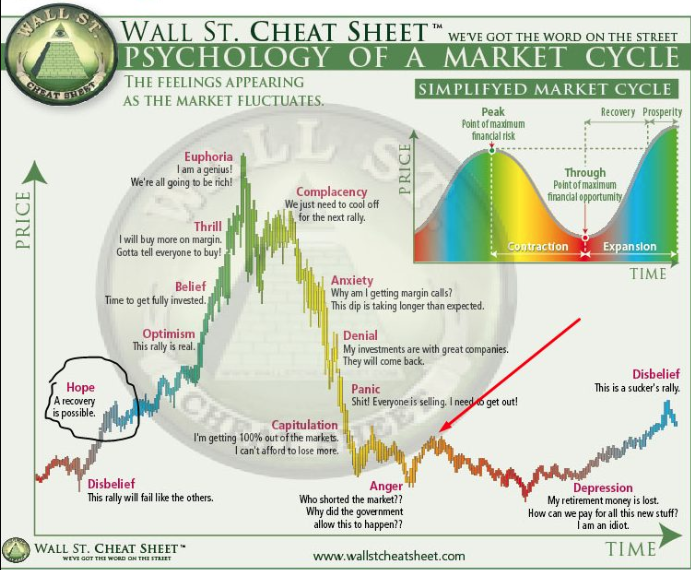
At the heart of this psychological maelstrom lie two of the most powerful and destructive emotional forces: FOMO (the Fear Of Missing Out) and Greed. These are not just feelings; they are cognitive biases hardwired into our psyche, remnants of an ancient past that are ill-suited for the modern financial markets. FOMO is the panic-driven compulsion to join a party that seems to be starting without you. Greed is the intoxicating whisper that the party will never end, convincing you to stay long after the music has died.
This article is your deep dive into the mind of a profitable trader. We will move beyond superficial tips and explore the neurological and psychological underpinnings of FOMO and Greed. More importantly, we will provide a practical, actionable framework for building the mental fortress of discipline, patience, and emotional regulation required not just to survive, but to thrive on Wall Street.
Part 1: Deconstructing the Demons – FOMO & Greed
FOMO (Fear Of Missing Out): The Chase of Panic
What it Feels Like: You see a stock like NVIDIA or a crypto asset like Bitcoin ripping higher. Your news feed is flooded with stories of others making life-changing money. Your pulse quickens, your palms sweat, and a knot forms in your stomach. The rational part of your brain is silenced by a frantic, internal monologue: “I can’t believe I missed this. I have to get in now before it goes even higher! Everyone is winning except me.”
The Neurological Trigger: FOMO is rooted in the brain’s amygdala, the center for processing fear and emotional reactions. It interprets “missing out” as a social and survival threat—exclusion from the tribe and its resources. This triggers a fight-or-flight response, flooding your system with cortisol and adrenaline. In this state, your prefrontal cortex—the seat of logical reasoning, planning, and impulse control—goes offline. You are no longer analyzing; you are reacting.
The Classic FOMO Trade:
- The Setup: A stock has already had a massive, parabolic move upward, often on sensational news.
- The Action: You buy at the very peak of the excitement, often after the first significant pullback, mistaking it for a “dip.”
- The Result: The momentum exhausts itself, the stock reverses sharply, and you are left holding a losing position, often at a loss so severe you freeze, unable to sell.
The Financial Cost: FOMO leads to buying high, the exact opposite of the trading axiom. It destroys risk management, as stops are ignored or placed too wide to be meaningful. It results in a portfolio of “chased” stocks, all bought at unsustainable levels.
Greed: The Illusion of the Infinite
What it Feels Like: You’re in a profitable trade. Your target of a 5% gain has been hit. But the stock is still going up. A voice in your head says, “Why take 5% when it could be 10%? This is the big one! Let it run!” You cancel your take-profit order. The stock continues up, and you feel like a genius. Then, it reverses. You watch your 5% profit turn to 4%, then 2%. “It’ll go back,” you think. It doesn’t. It hits your breakeven point. Now, greed morphs into hope. “I won’t sell for a loss on a trade that was once profitable.” It continues down, turning into a loss, and you finally sell at the bottom, filled with regret and frustration.
The Neurological Trigger: Greed is linked to the brain’s reward system, particularly the release of dopamine. Each tick in your favor provides a small dopamine hit, creating a pleasurable, addictive sensation. The thought of turning off this “dopamine drip” by closing the trade feels unpleasant. Your brain, craving more, convinces you to override your initial, logical plan.
The Classic Greed Trade:
- The Setup: A trade moves favorably, surpassing your initial, rational profit target.
- The Action: You move your profit target arbitrarily higher, abandoning your trading plan. You refuse to take profits, believing the trend is infinite.
- The Result: You give back a significant portion, or all, of your unrealized gains. Greed prevents you from banking consistent profits and turns winning trades into losers, which is psychologically devastating.
The Vicious Cycle: How FOMO and Greed Feed Each Other
These two forces are not isolated; they form a destructive feedback loop:
- FOMO causes you to buy a stock at a bloated price after a huge run-up (driven by greed in other traders).
- The stock pulls back slightly, and you are immediately at a loss. But Greed (disguised as hope) tells you to hold on, because it will surely go back to your entry and beyond.
- The stock continues to fall. Fear and panic set in, and you finally sell for a significant loss.
- Emotionally bruised and desperate to recoup your losses, you see another stock rocketing higher.
- FOMO kicks in again, and the cycle repeats.
This cycle is the primary engine of account blowouts for undisciplined traders.
Part 2: The Pillars of a Profitable Mindset
Overcoming FOMO and Greed is not about eliminating emotion—that’s impossible. It’s about building a stronger, more disciplined framework for your decision-making. It’s about installing a “psychological immune system.”
Pillar 1: The Sacred Trading Plan
Your trading plan is your constitution. It is a written, unambiguous document that removes discretion and, therefore, emotion from your trading.
A robust trading plan must define:
- Your Strategy: The exact setup you are looking for (e.g., pullback to 50-day EMA, breakout from consolidation).
- Entry Criteria: The precise conditions that must be met before you enter a trade (e.g., a bullish engulfing candle on support, with volume > 20-day average).
- Position Sizing: The exact formula for how much capital you will risk on each trade (e.g., no more than 1-2% of total capital).
- Stop-Loss Rules: The exact, unemotional point at which you will exit a losing trade. This is non-negotiable.
- Profit-Taking Rules: The exact conditions under which you will exit a winning trade (e.g., sell 50% at a 1:2 risk-reward ratio, trail the rest with a moving average).
How it Defeats FOMO & Greed:
- Against FOMO: If a stock is rocketing higher but does not meet your predefined entry criteria, it is simply not your trade. The plan gives you the confidence to say, “This is not for me,” and look away. You are a sniper, not a machine gunner.
- Against Greed: When a trade hits your predefined profit target, you must take the money. The plan forces you to bank the profit and be satisfied. It overrides the dopamine-driven voice saying, “more, more, more.”
Pillar 2: The Ritual of Pre-Market Preparation
The market open is a period of peak emotional volatility. If you are not mentally prepared, you will be swept away.
Your Pre-Market Ritual Should Include:
- Reviewing the Broader Market: Check the S&P 500 futures. Is the market in a clear trend or choppy? This sets your overall bias.
- Reviewing Your Watchlist: Look at the charts of the 5-10 stocks you are already tracking. Identify key support and resistance levels.
- Mental Rehearsal: Visualize yourself executing your plan perfectly. See yourself patiently waiting for your setup, calmly entering, and unemotionally taking a loss or a profit. This primes your brain for disciplined action.
- Setting Alerts: Instead of watching screens, set price alerts for your key levels. This prevents you from getting sucked into the intra-minute noise and making impulsive decisions.
Pillar 3: The Discipline of Post-Market Analysis
The learning happens after the battle. A trading journal is not a diary; it is your most valuable diagnostic tool.
For every trade, log:
- The setup and reason for entry.
- Charts with entry, stop, and target marked.
- The outcome (P/L).
- Most Importantly: Your emotional state. “Felt FOMO because I saw it on Twitter.” “Felt greedy and didn’t sell at target.” “Felt scared and sold early.”
How it Defeats FOMO & Greed:
By consistently reviewing your emotional missteps, you pattern-recognize your own psychological triggers. You see, in black and white, how costly FOMO and Greed are. This objective feedback loop is brutal but essential for growth. You are no longer blaming the market; you are taking responsibility and fixing the one thing you can control—yourself.
Read more: Demystifying the U.S. Credit Score: How to Build, Maintain, and Fix Your Credit
Part 3: Advanced Psychological Techniques
1. Cognitive Reframing: Changing the Narrative
Your internal dialogue shapes your reality. You must reframe how you view market events.
- Instead of: “I missed out on that huge move in META. I’m an idiot.”
- Reframe to: “That was not my setup. My edge lies in waiting for a proper pullback. There will be thousands of other opportunities, and by sticking to my plan, I preserve my capital for them.”
- Instead of: “I only made 5%, but if I’d held on, I could have made 15%. I left money on the table.”
- Reframe to: “I executed my plan perfectly and banked a solid, professional profit. A profit is a profit. Consistency over time is what creates wealth.”
2. Mindfulness and Emotional Labeling
When you feel the pang of FOMO or the swell of Greed, don’t suppress it. Acknowledge it.
- The Practice: When the feeling arises, say to yourself, “This is FOMO,” or “This is Greed.” By consciously labeling the emotion, you create a small space between the feeling and your action. In that space lies your freedom to choose.
- The Breath: Follow this by taking three deep, slow breaths. This simple act calms the nervous system and helps bring your prefrontal cortex back online.
3. Process Over Outcome Orientation
The profitable trader is obsessed with the process; the losing trader is obsessed with the money.
- Outcome-Oriented: “I need to make $1,000 today.” This leads to forcing trades, overtrading, and taking excessive risk.
- Process-Oriented: “My goal today is to wait for two A+ setups from my plan and execute them with perfect risk management.” This is a goal you have 100% control over.
Judge yourself on the quality of your execution, not the profit or loss of a single trade. A well-executed trade that results in a loss (stop-loss hit) is a good trade. A poorly executed trade that results in a profit (a FOMO buy) is a bad trade because it reinforces destructive behavior.
Part 4: A Tale of Two Traders: A Practical Scenario
Let’s see how this plays out in a real-world example during a market frenzy.
The Situation: Artificial Intelligence company “TechNovate” releases a groundbreaking product. The stock ($TNOV) gaps up 40% at the open and continues to climb throughout the morning.
Trader A (The Emotional Trader):
- Mindset: “This is the next big thing! Everyone is talking about it. I can’t miss this.”
- Action: At 11:30 AM, with the stock up 55% from the previous close and showing signs of exhaustion, he FOMOs in, buying at $155.
- Psychology: He is euphoric for the first hour as it ticks up to $158. Then, profit-taking begins. It drops to $152. Greed/Hope says, “It’s just a dip, it will rebound.” It drops to $145. Panic sets in. He finally sells at $140 for a near 10% loss, feeling defeated.
Trader B (The Disciplined Trader):
- Mindset: “Incredible move. But this is pure speculation and noise. My strategy is based on measured breakouts, not emotional gaps. This is not my trade.”
- Action: He watches the ticker with detached curiosity. He does not buy. He may even set an alert for weeks later, after the hype has died down, to see if it forms a proper base he can trade.
- Psychology: He feels no stress. He feels empowered by his discipline. His capital is preserved, ready to be deployed according to his plan, not the market’s whims.
Weeks later, $TNOV has given back all its gains and trades lower. Trader A is licking his wounds and searching for the next “sure thing.” Trader B is calmly entering a planned trade on a different stock, following his rules.
Read more: Your Emergency Fund: How Much Do You Really Need in the U.S. Today?
Conclusion: The Path to Mastery
Trading is a journey of self-discovery. The charts are merely a reflection of the collective human psyche, and your P&L is a report card on your own psychological discipline. Conquering FOMO and Greed is the final frontier in becoming a consistently profitable trader.
It requires relentless honesty, a commitment to a written plan, and the understanding that you are your own greatest asset and your own worst enemy. There is no finish line. It is a daily practice of reinforcing discipline, analyzing your mistakes, and celebrating the quality of your execution.
The markets will always be there, offering new opportunities and new temptations. By building the mental fortress outlined in this article, you equip yourself to navigate them not as a reactive speculator, but as a calm, disciplined, and professional businessperson. The prize is not just financial; it is the profound self-mastery that comes from conquering the Wall Street within.
Frequently Asked Questions (FAQ)
Q1: I understand the theory, but in the moment, the emotion is overwhelming. How can I build this discipline?
A: You build it like a muscle: with consistent, small efforts. Start by paper trading for a month with a strict, simple plan. The goal isn’t to make fake money; it’s to build the habit of following rules. Then, move to a live account with a tiny position size—so small that a win or loss feels boring. This desensitizes you to the monetary emotion and allows you to focus purely on the process. Gradually increase size as your discipline holds.
Q2: Is it ever okay to deviate from my trading plan?
A: As a general rule, no. A plan created in a calm, rational state will always be superior to an impulsive decision made under the influence of market hormones. The only acceptable deviations are to reduce risk (e.g., taking a smaller position than allowed) or exit a trade earlier if your original thesis is objectively broken before your stop is hit. Never deviate to increase risk or ignore a stop-loss.
Q3: How can I deal with the regret of missing a big move that I initially saw but didn’t take?
A: This is a classic test. First, reframe it: you didn’t “miss” anything because it was never yours to begin with. It was outside your plan. Second, accept that you will never capture every move—no trader in history ever has. The goal is to capture the moves that are rightfully yours according to your strategy. Letting go of the need to catch every wave is incredibly liberating and is a sign of mature trading.
Q4: I often take profits too early out of fear of the trade reversing. How is this different from greed?
A: This is the flip side of the same coin, driven by Fear rather than Greed. The root is often an emotional need to “be right” and secure a win, or a position size that is too large, making the P&L swings unbearable. The solution is the same: a rock-solid trading plan that defines your profit-taking rules. Using a trailing stop or scaling out of positions (e.g., selling half at target 1, letting the rest run) can also help manage this anxiety.
Q5: Can meditation or other practices really help my trading?
A: Absolutely. Countless professional traders incorporate mindfulness, meditation, or other focus-enhancing practices into their routine. The science is clear: meditation strengthens the prefrontal cortex and weakens the amygdala’s reactive grip. Even 10-15 minutes a day can significantly improve your emotional regulation, focus, and ability to detach from the market’s noise. It’s a direct workout for your “trader’s mind.”
Q6: How long does it take to overcome these psychological hurdles?
A: There is no set timeline. It’s a continuous journey, not a destination. You will have good days and bad days. The key is consistent self-awareness and a commitment to learning from every experience. Many traders find that after meticulously journaling for 6-12 months, they see a dramatic reduction in emotionally-driven errors because they’ve actively rewired their habits.